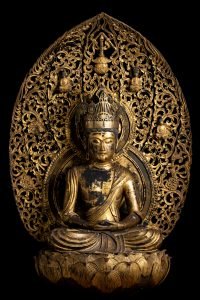
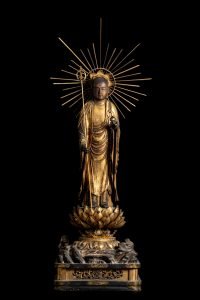
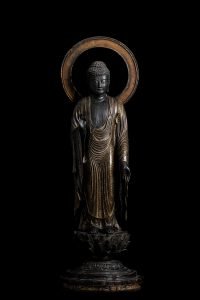
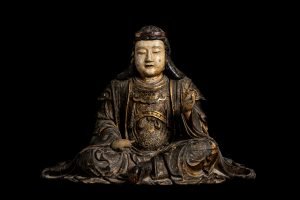
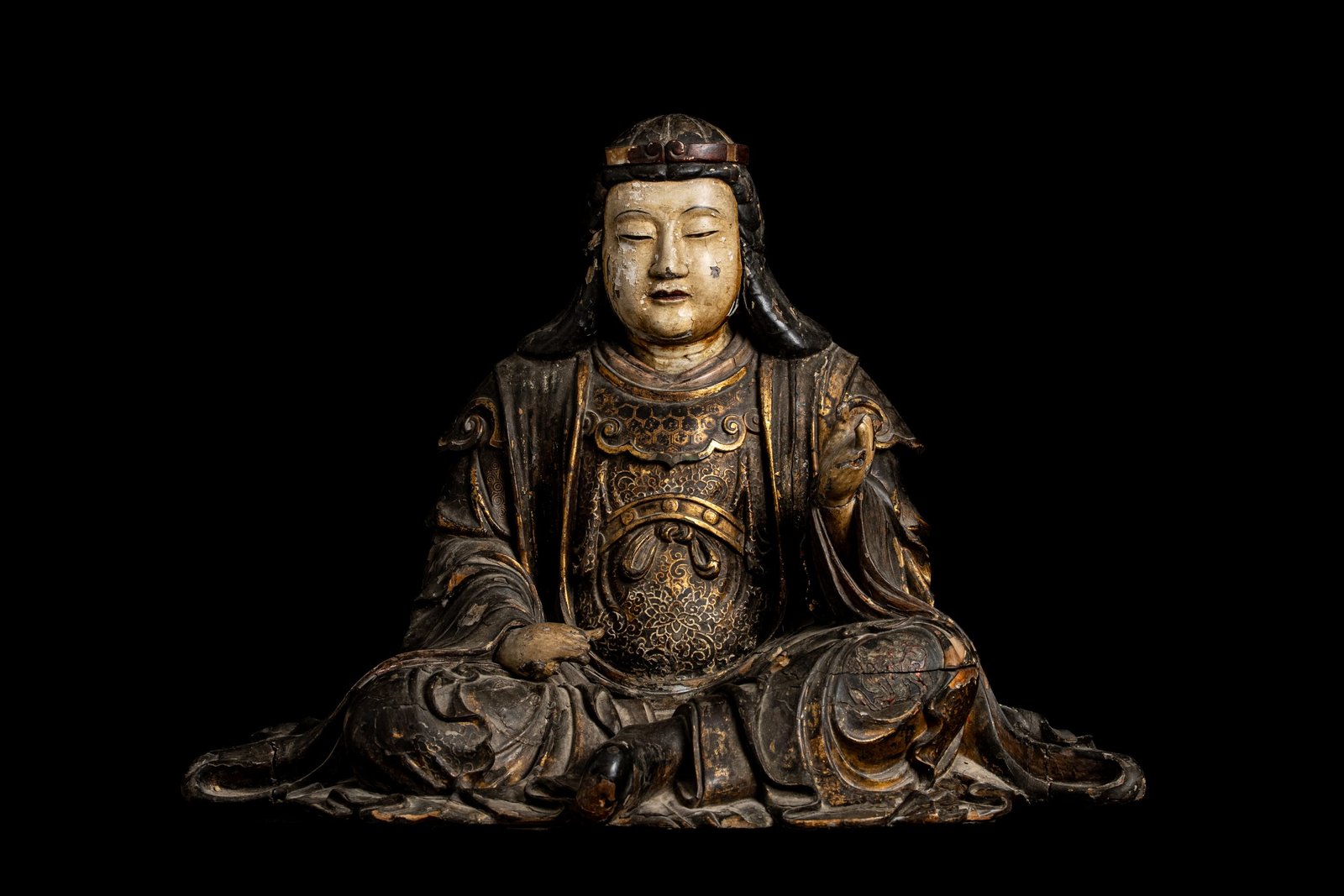
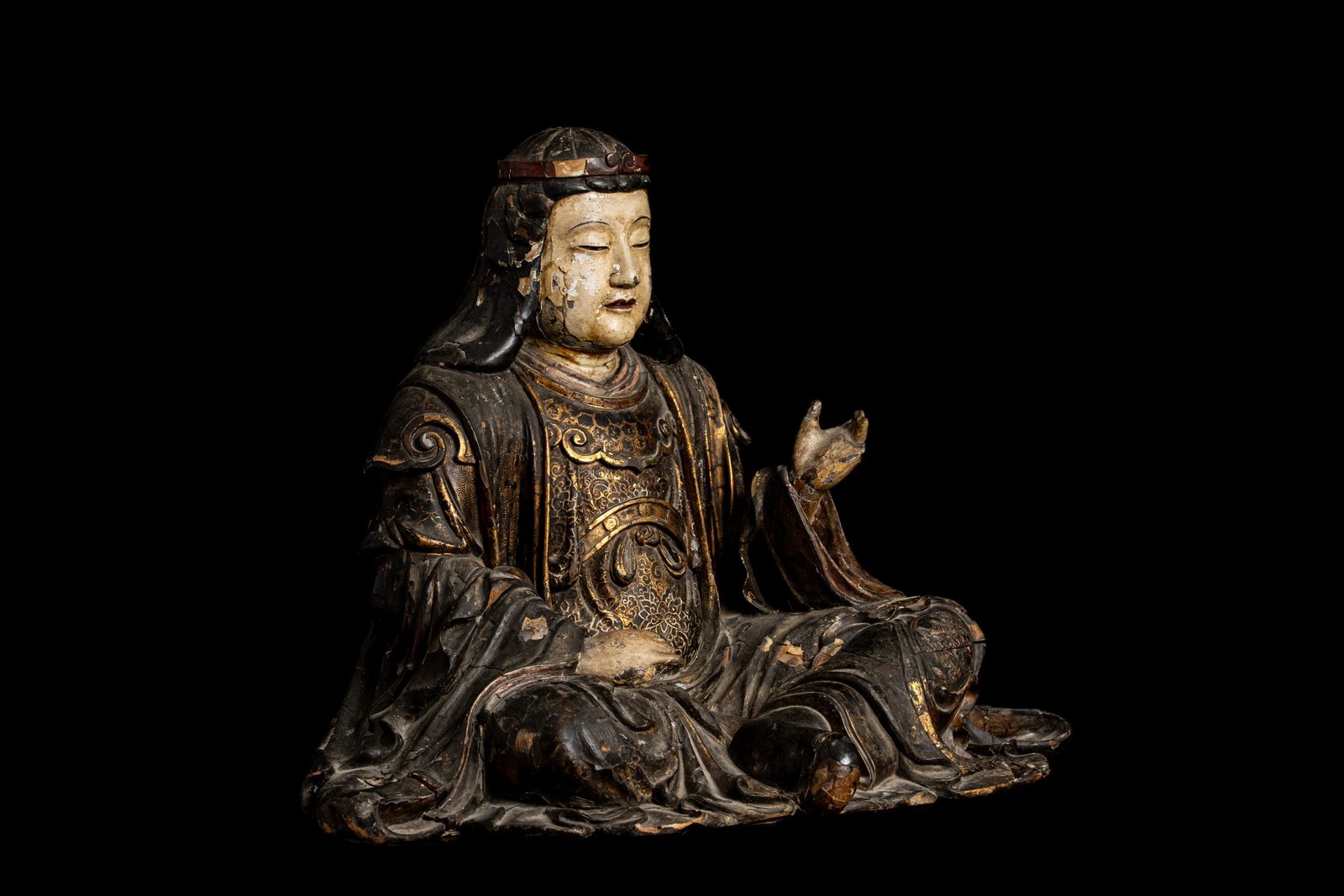
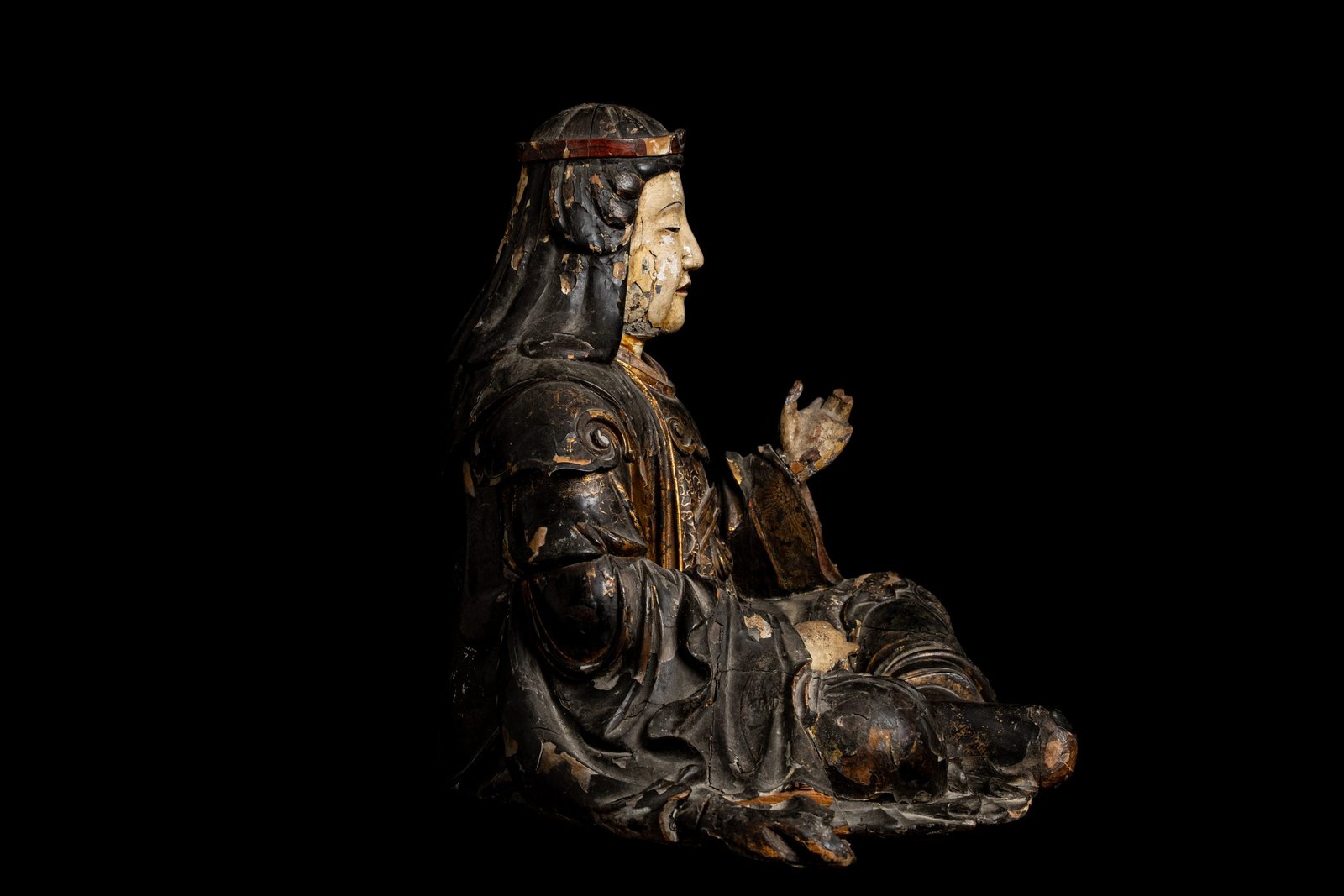
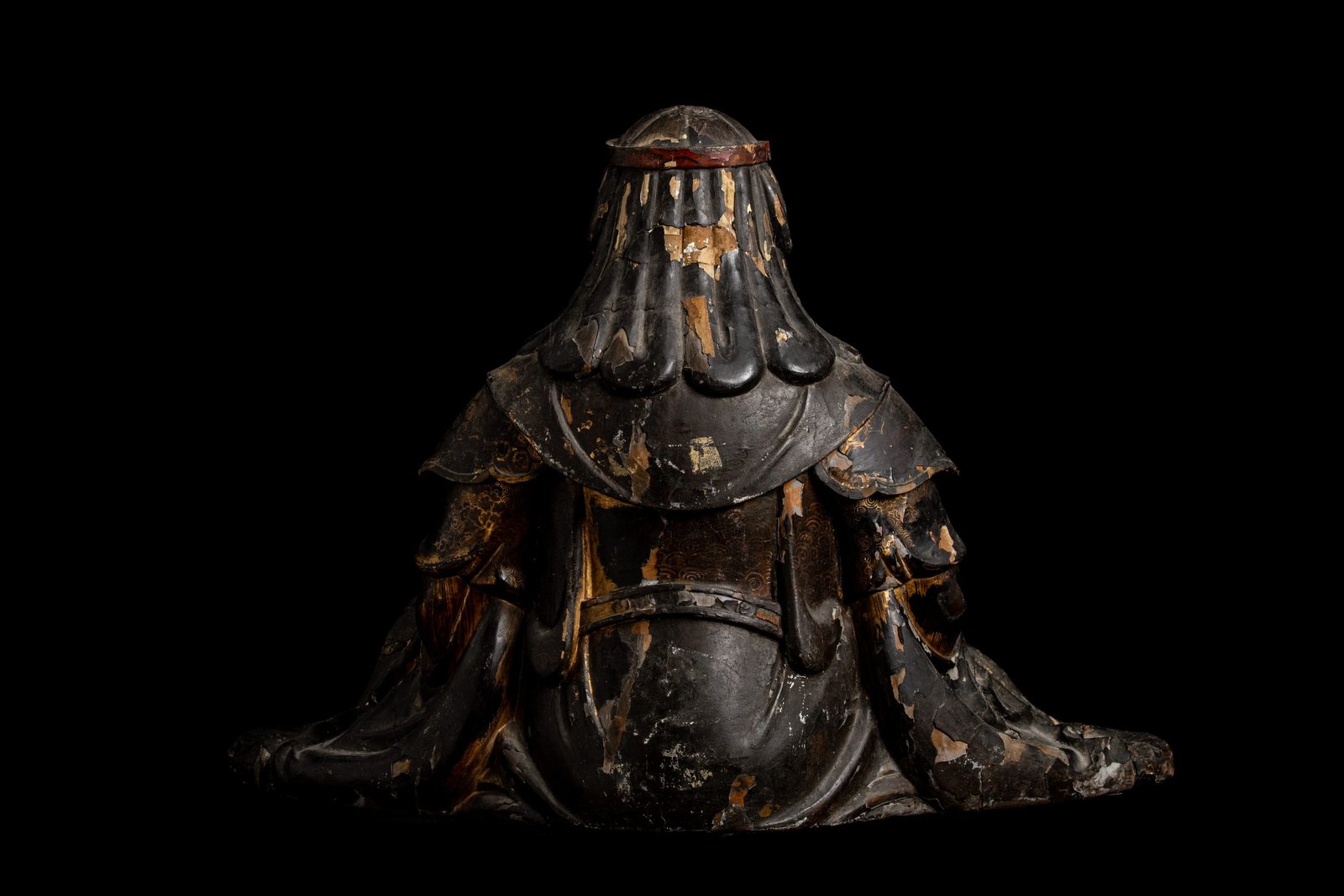
A lacquered, painted, and gilded wooden statue of the goddess Benzaiten from 13th–14th century Japan. The carving was created using the yosegi zukuri technique, which involved working with hollow wood composed of multiple pieces. The body parts were individually carved first, assembled together, and only then were the detailed carvings added. The eyes are inlaid with crystal. Benzaiten is dressed in an elegant, multi-layered robe featuring intricate gilded decorations on the torso, including geometric patterns, lotus flowers, cloud motifs, and the characteristic bow. Her hair falls over her shoulders, and she wears a simple crown on her head. Her damaged right hand likely once held a sword, a typical attribute of the goddess, while her left hand may have held a wish-fulfilling jewel.
Benzaiten is one of the most important goddesses in Japan, often depicted in the company of dragons and snakes. She is regarded as the protector of the state, promising not only luck and prosperity but also protection from illness and misfortune. Benzaiten originates from the Hindu goddess Saraswati, which explains the similarities between them. For example, Benzaiten is often shown holding a biwa (a Japanese lute), while Saraswati holds a veena (an Indian stringed instrument). Benzaiten’s significance became so great that she was eventually incorporated into Shintoism as well.