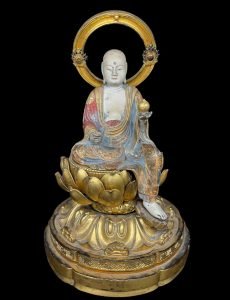
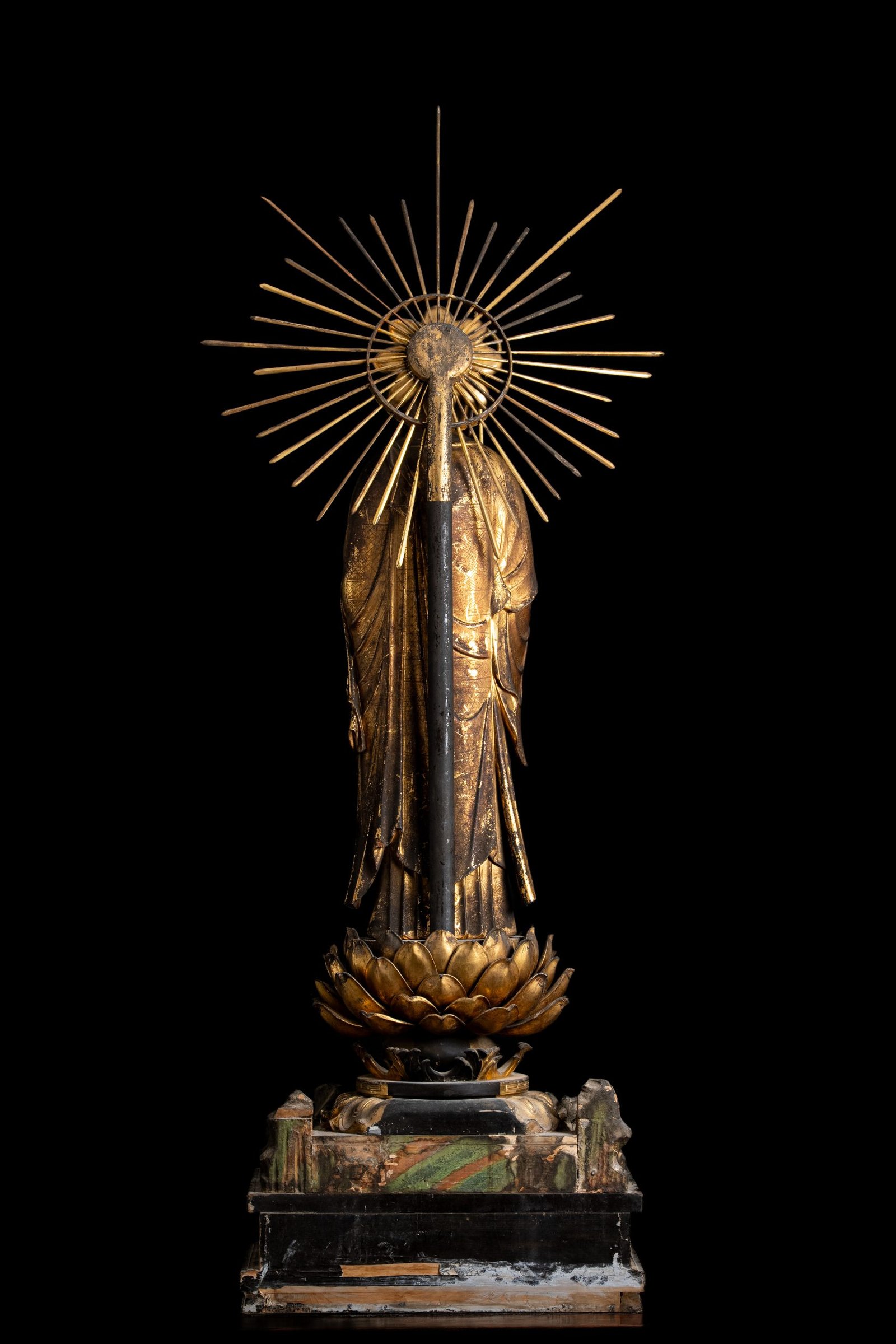
Dimensions: 57 cm (Jizo), 116 cm (entire figure with mandorla)
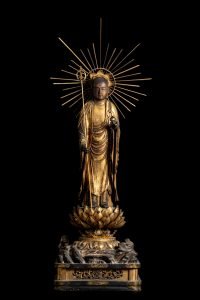
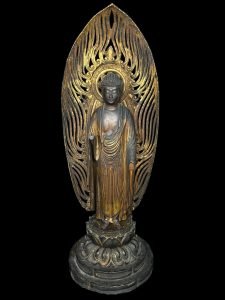
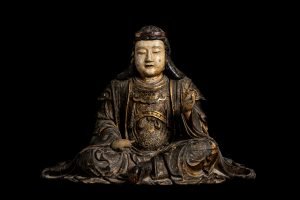
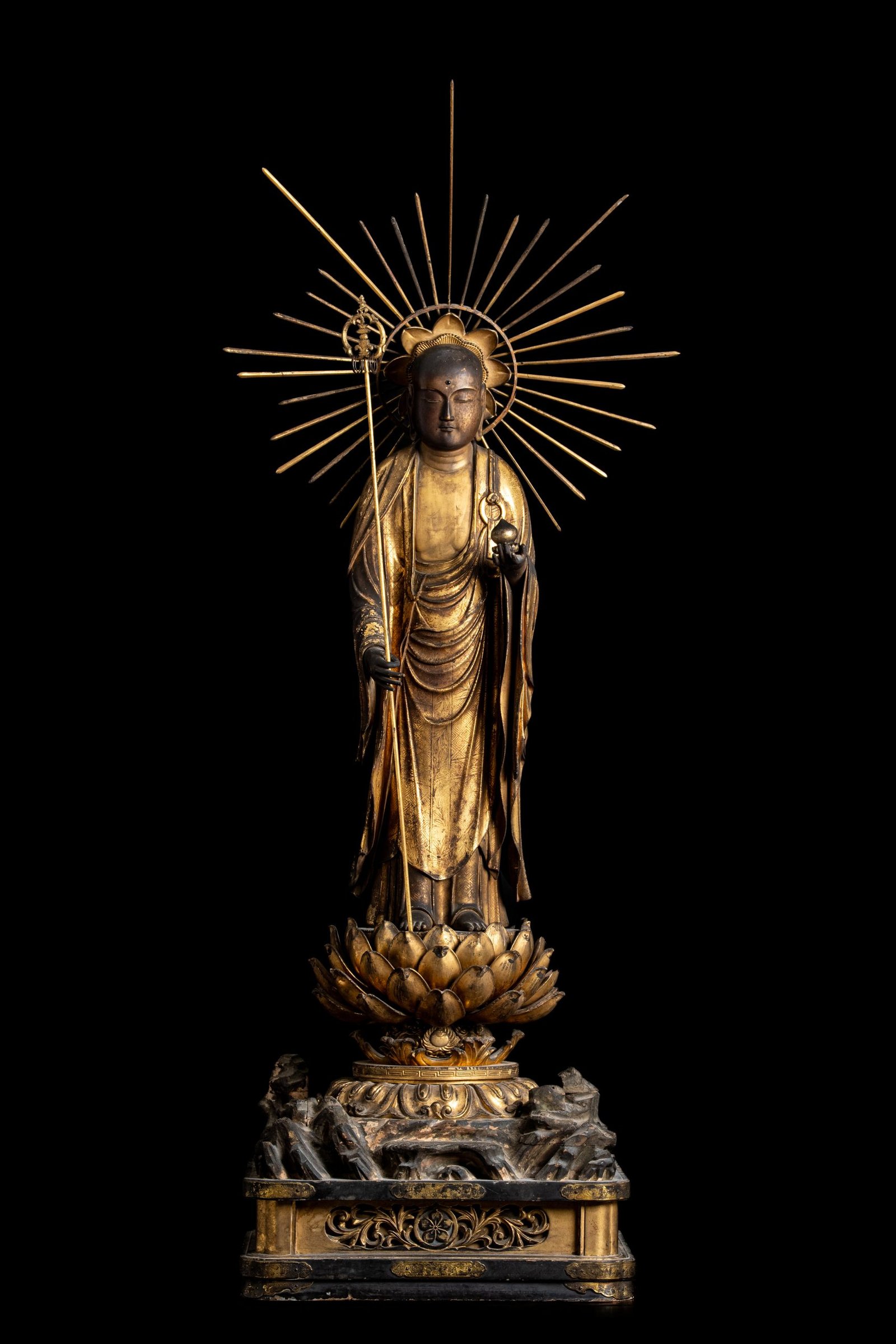
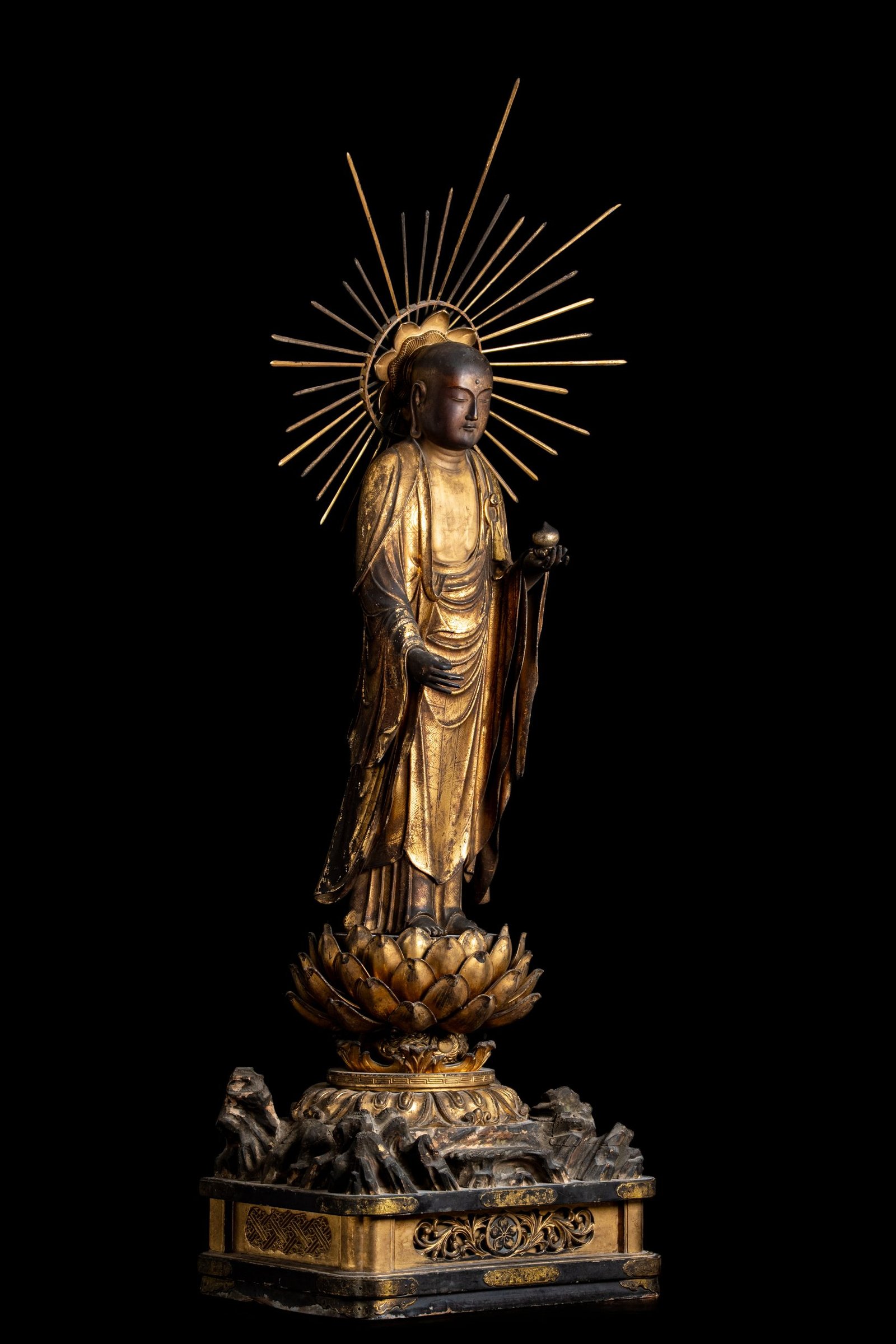
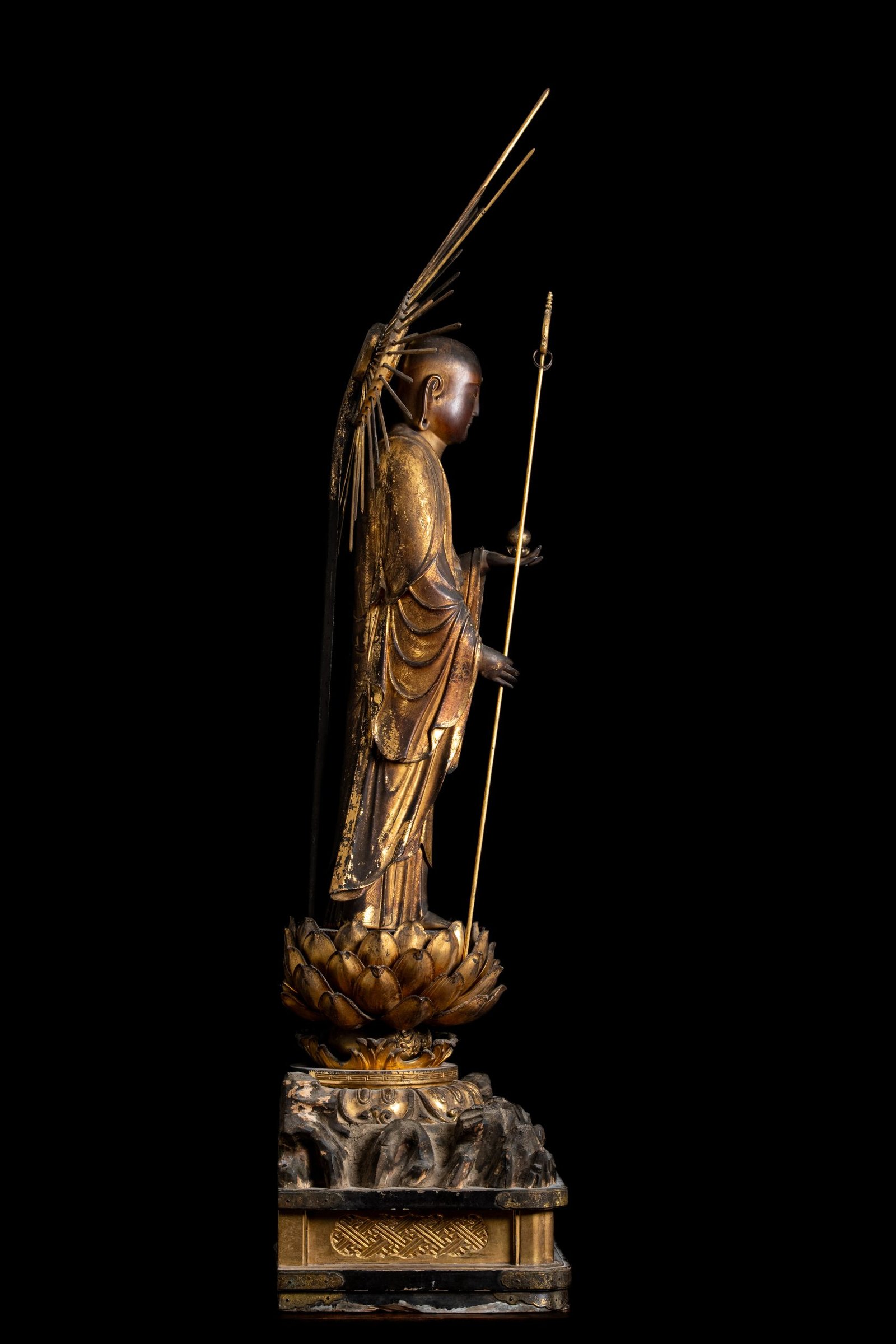
A gilded and painted wooden statue of Jizo Bosatsu from the Kamakura period. Jizo stands barefoot on a double lotus throne placed on a rock, with a circular mandorla behind his head, symbolizing sun rays. The throne is decorated with five layers of lotus petals. The statue was carved using the yosegi zukuri technique, where individual parts of Jizo were carved separately and then assembled. The crystal-inlaid eyes further confirm this carving technique. In his right hand, Jizo holds a characteristic monk’s staff (shakujō), and in his left hand, he holds a sacred jewel (hōju), symbolizing the immense power of the Bosatsu’s salvation. Both objects have been replaced later. The robe features various gilded geometric, floral, and cloud motifs.
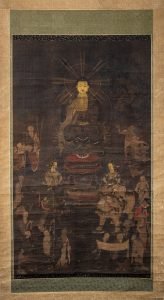
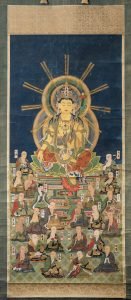
Jizo: Jizo is one of the most widely venerated bodhisattvas in Japan, guiding and teaching all beings in the six realms until the arrival of the future Buddha, Maitreya. In Japan, Jizo is known as the protector of children and vowed not to attain full Buddhahood until all hells have been cleansed of evil. This is why Jizo is often depicted holding a shakujō (a monk’s staff that opens the gates of hell) and a hōju (a jewel that brings light to darkness).