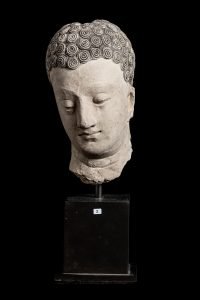
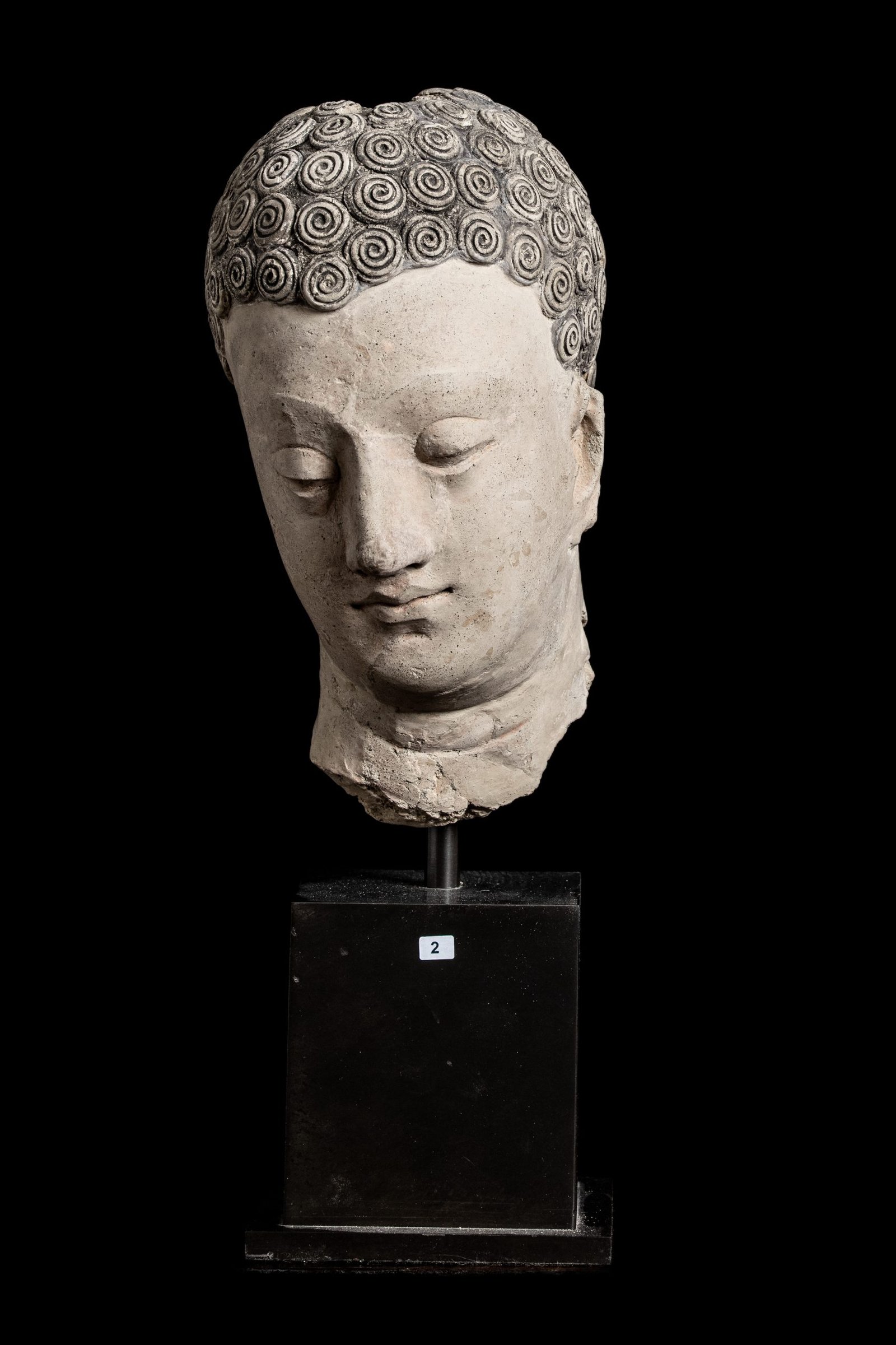
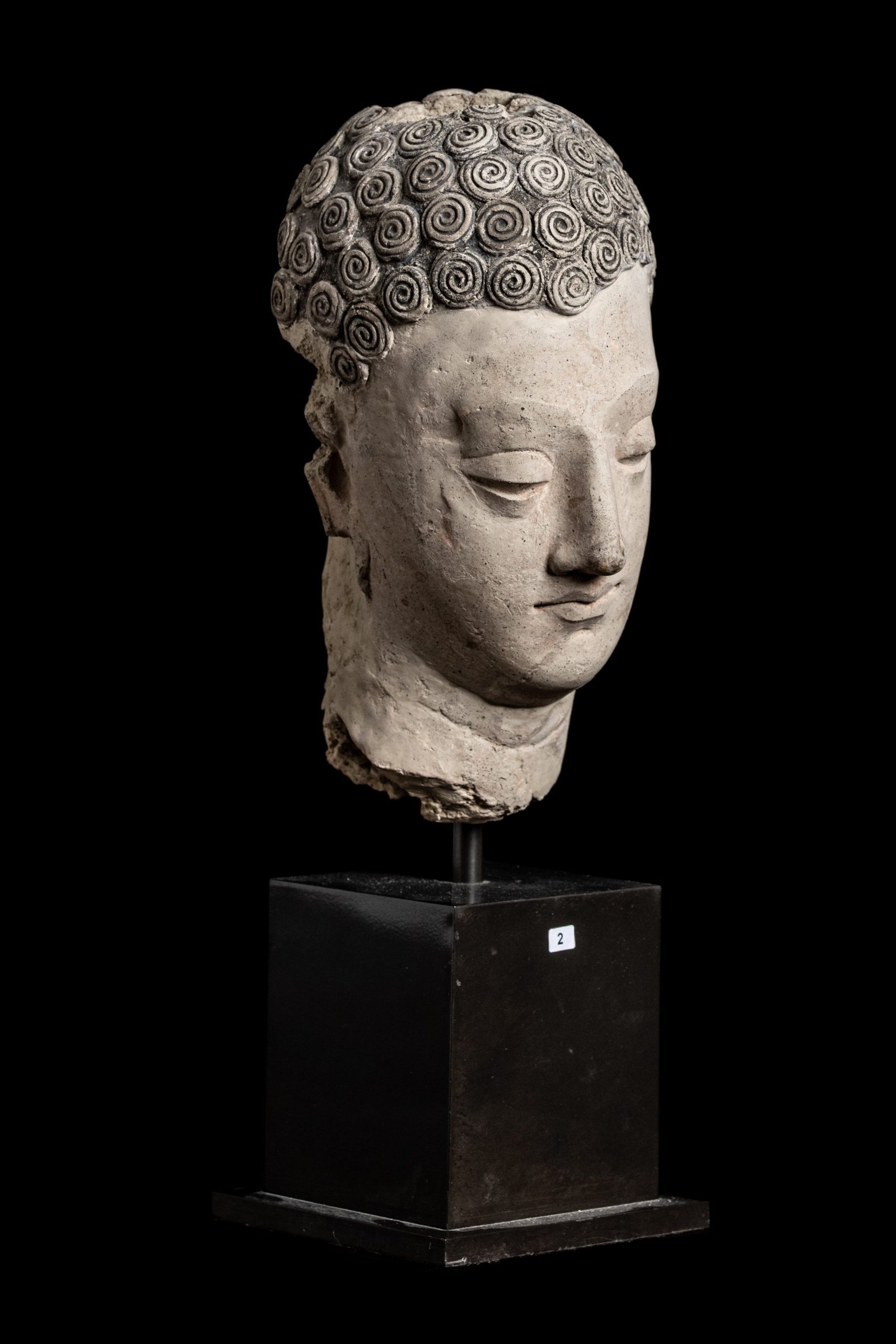
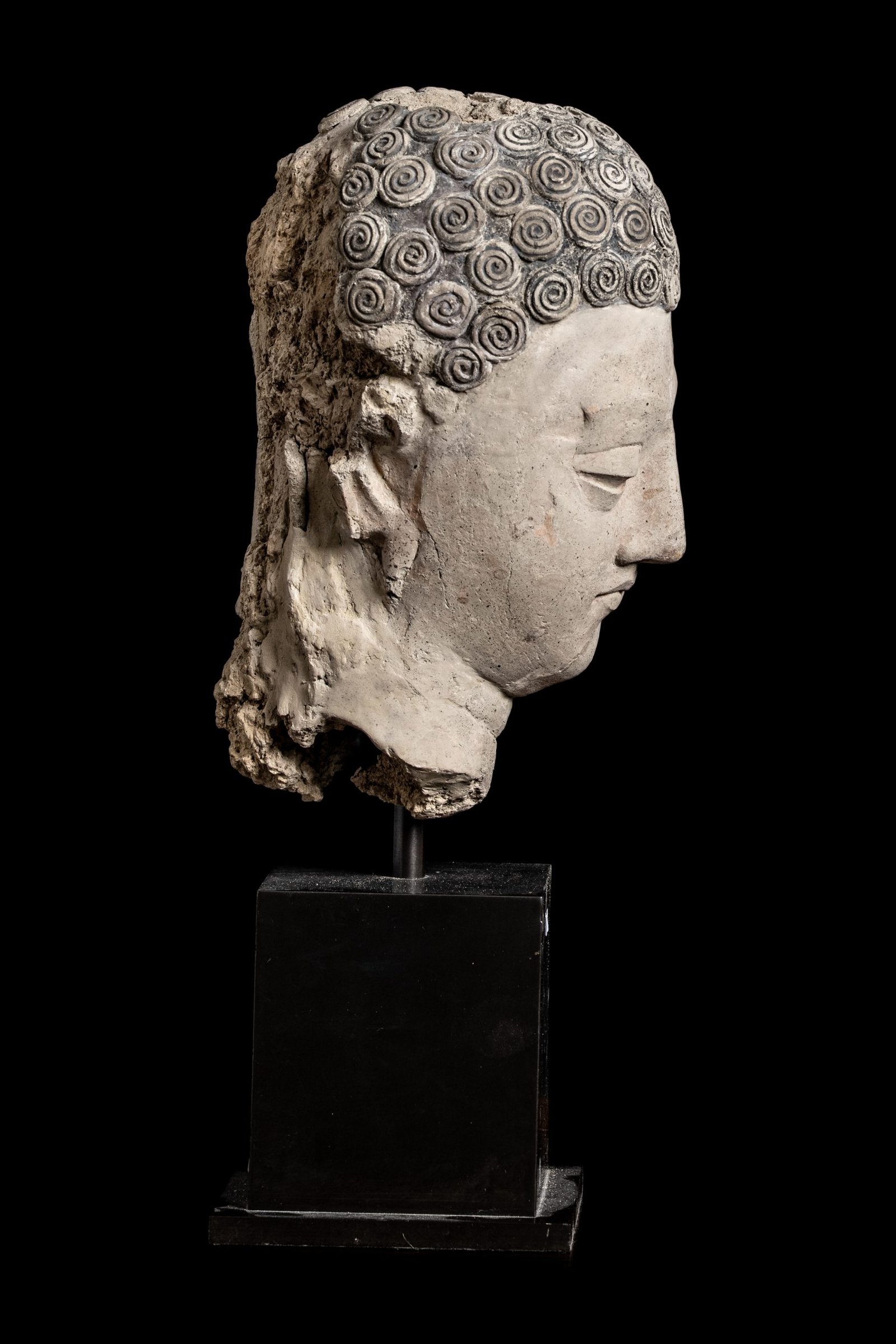
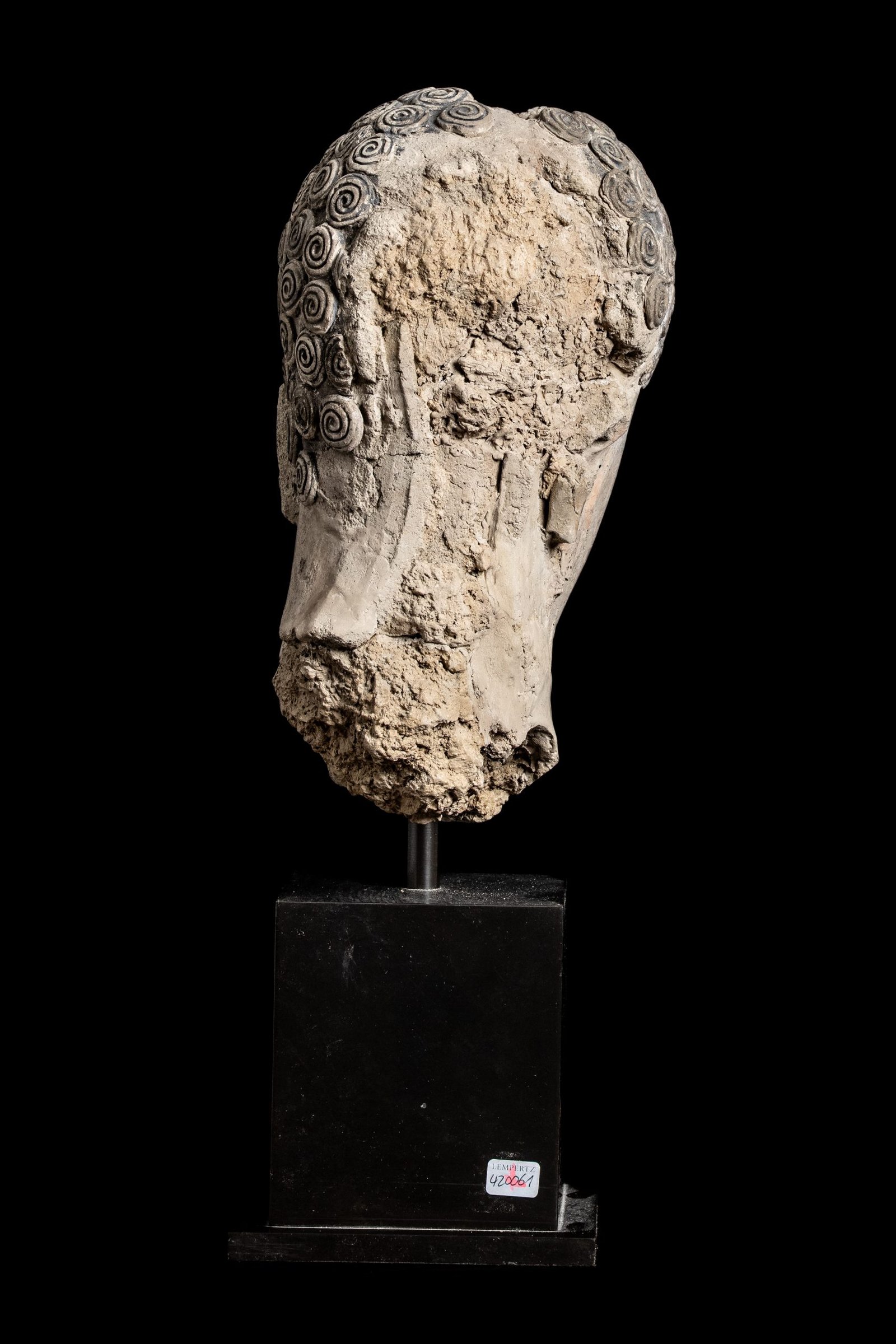
Stucco buddha head from Gandhara, 2nd century. Although the 25 cm sculpture has a Buddhist theme, it has Hellenistic stylistic features, which were a result of the conquests of Alexander the Great in the region. The head sculpture follows the highly lifelike, human style of Greco-Roman: full lips, broad nose, downward-facing, pronounced eyes. His hair is made up of tiny tendrils that cling tightly to his head. The front of the statue is preserved, the back of the head and neck are missing.
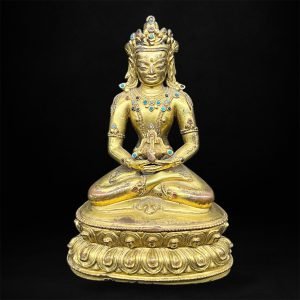
Several statues depict the Buddha with small curly locks clinging tightly to his scalp. However, the Buddha, like other monks, had his head shaved bald, as hair was often considered the “root of ignorance”, so that by getting rid of it, the monks could concentrate on learning and enlightenment. So why are they depicted with tiny dots and curls? According to stories, when the Buddha was meditating under the Sacred Fig Tree, it was such a hot day that the earth snails around him decided to climb on his head and protect him from the heat with their slime, so that he would not be disturbed from deep meditation. 108 snails crawled up on his bald head and covered him so that by the end of the day the Buddha had attained enlightenment, and all those little snails were petrified on his scalp by the heat and died a martyr’s death. Based on this story, many works of art depict the Buddha with exactly 108 petrified snails on his head.