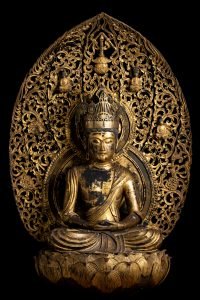
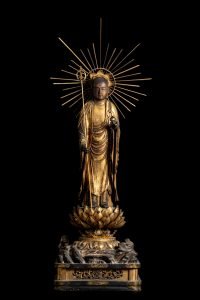
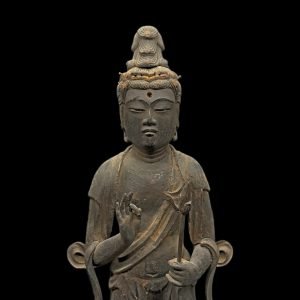
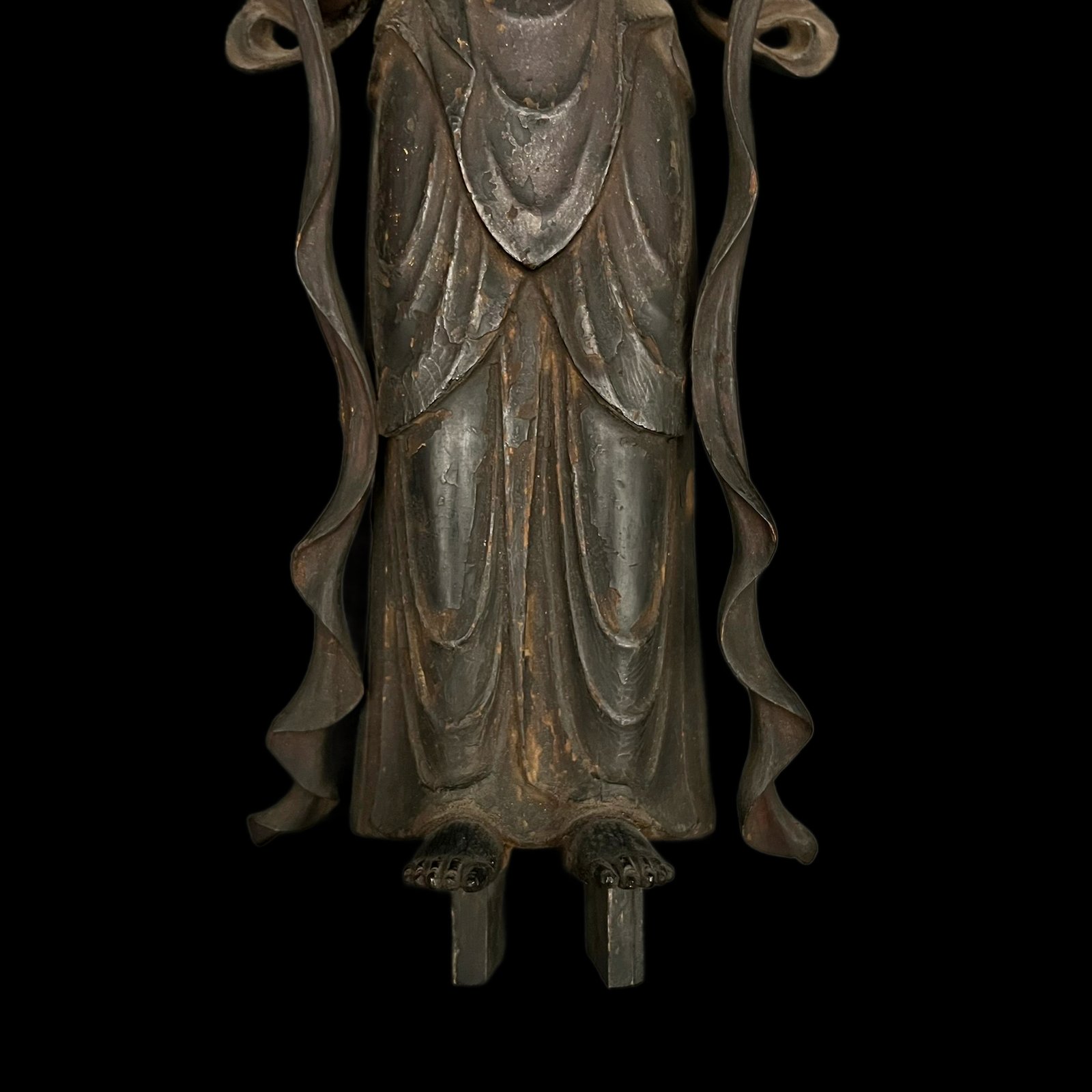
Japan, late Heian/early Kamakura period, 12 – 13th century (1160 and 1250)
Dimensions: 40 cm
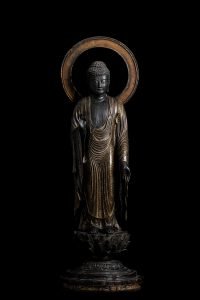
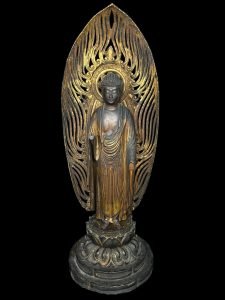
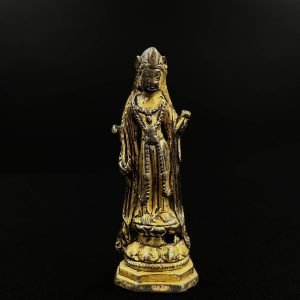
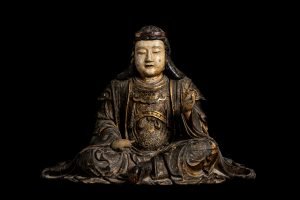
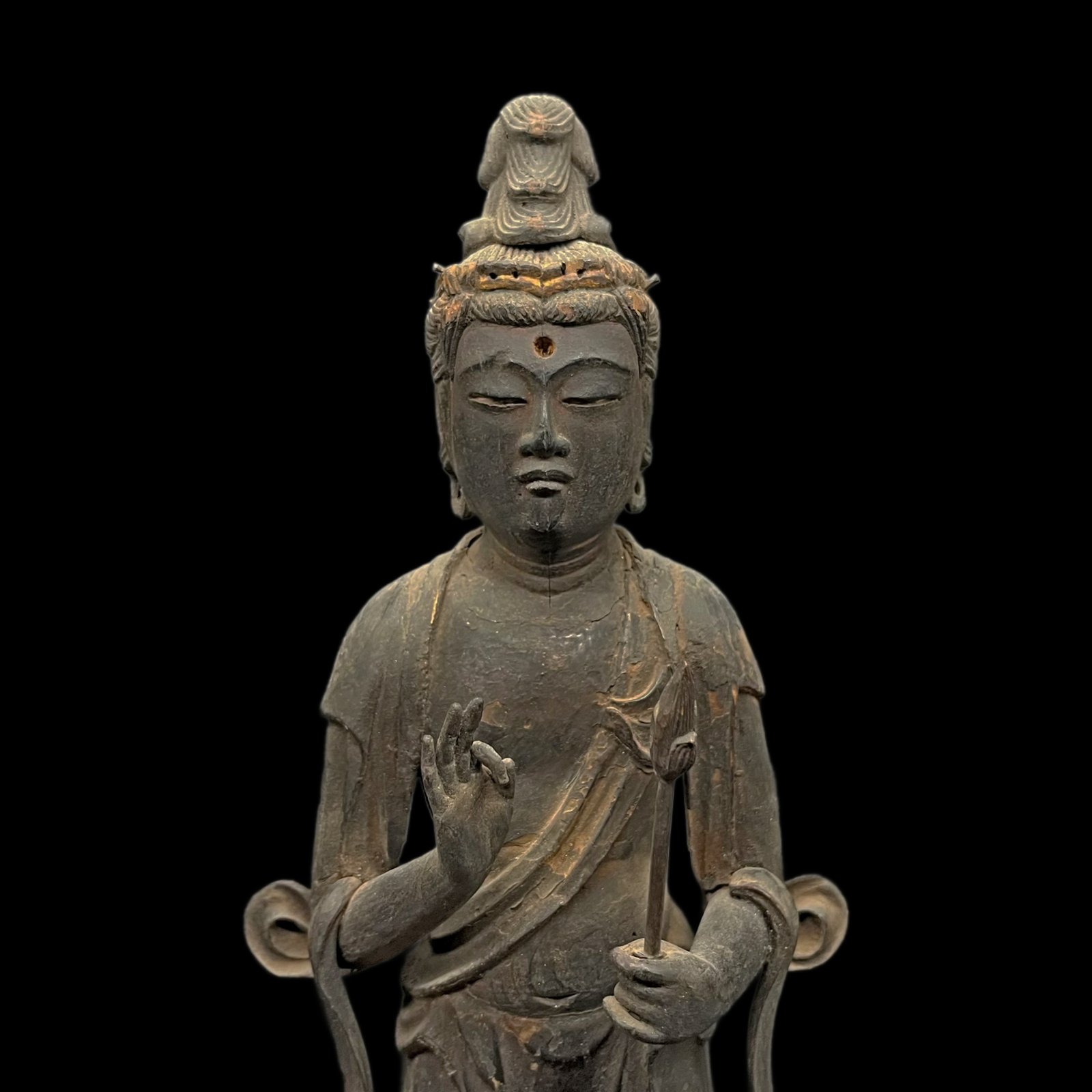
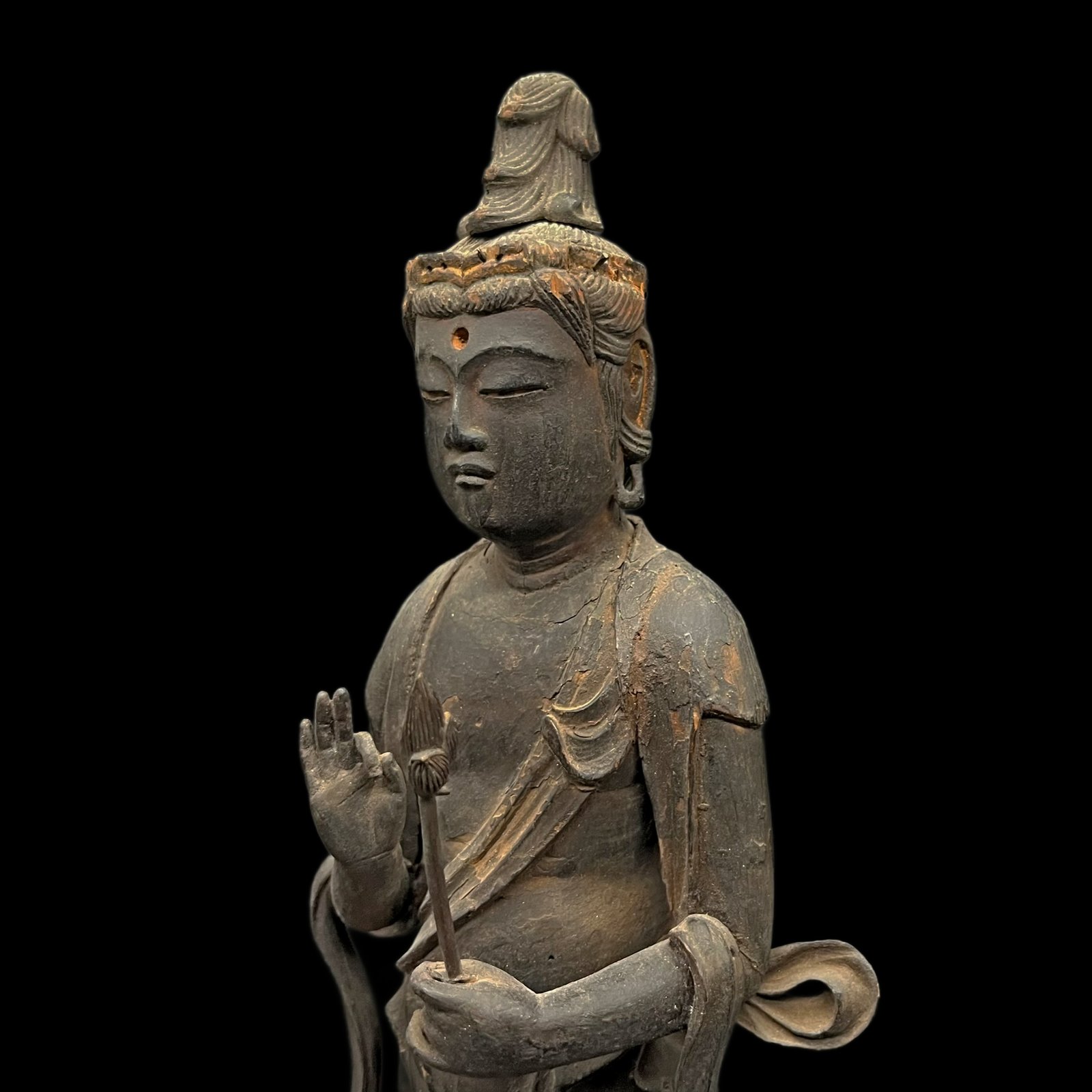
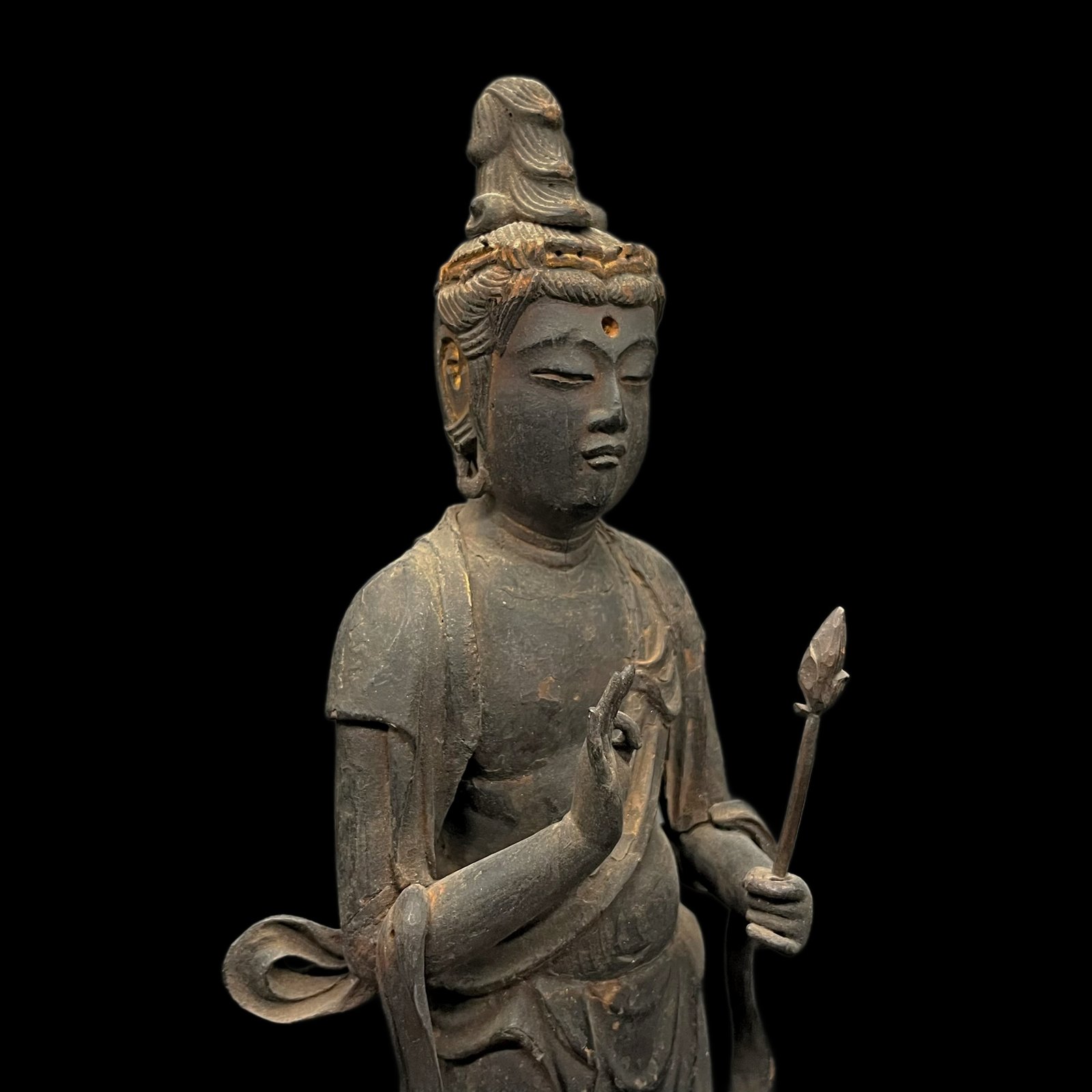
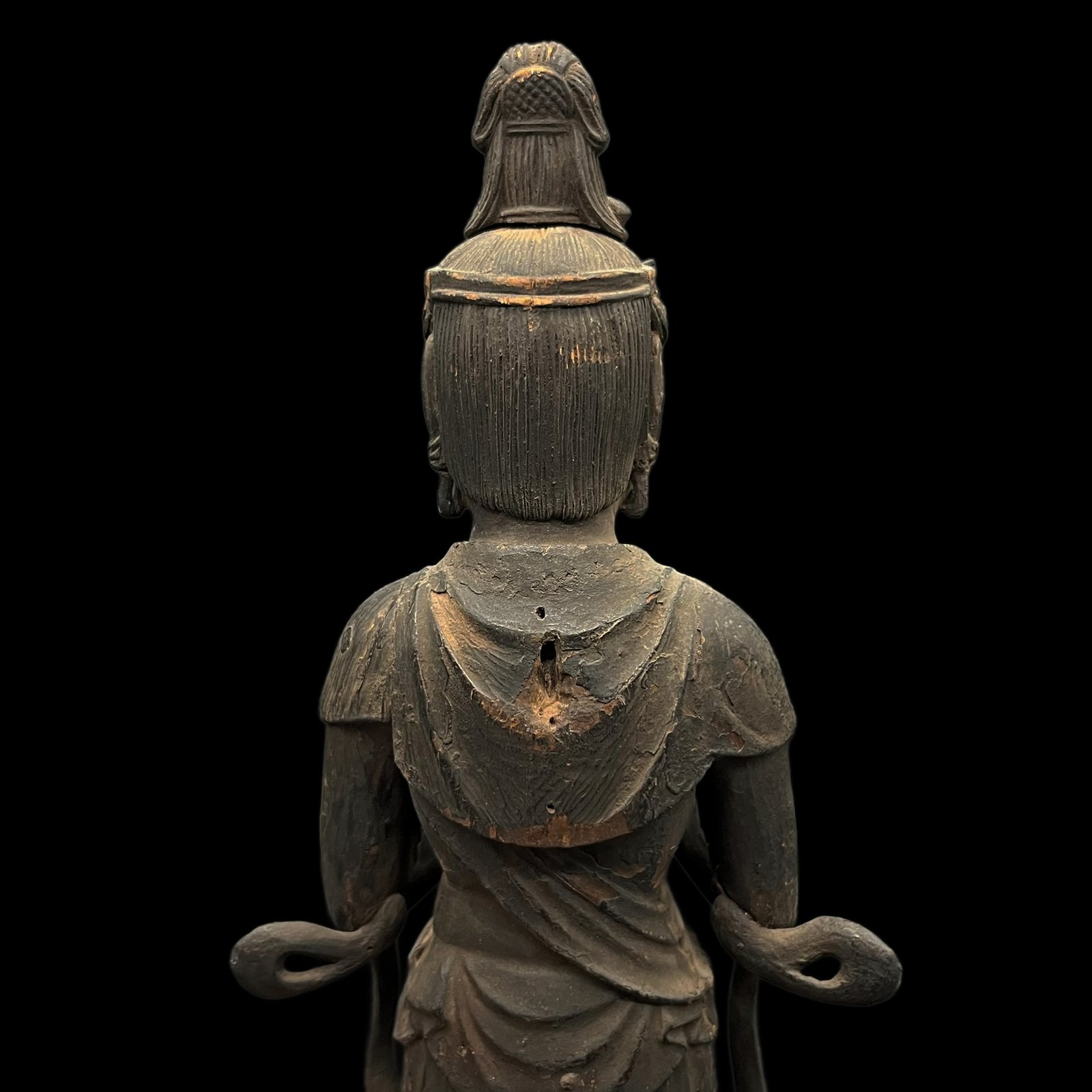
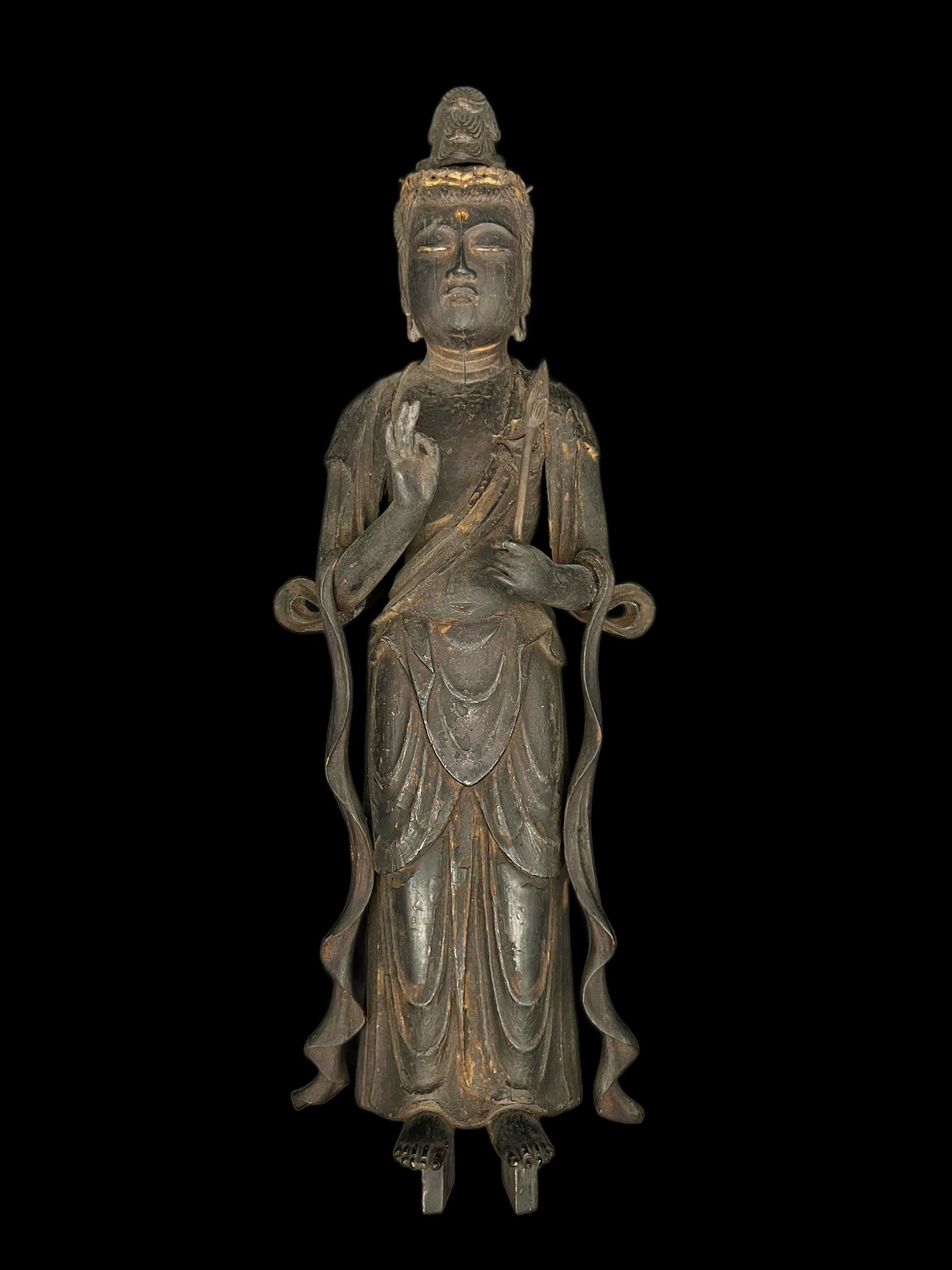
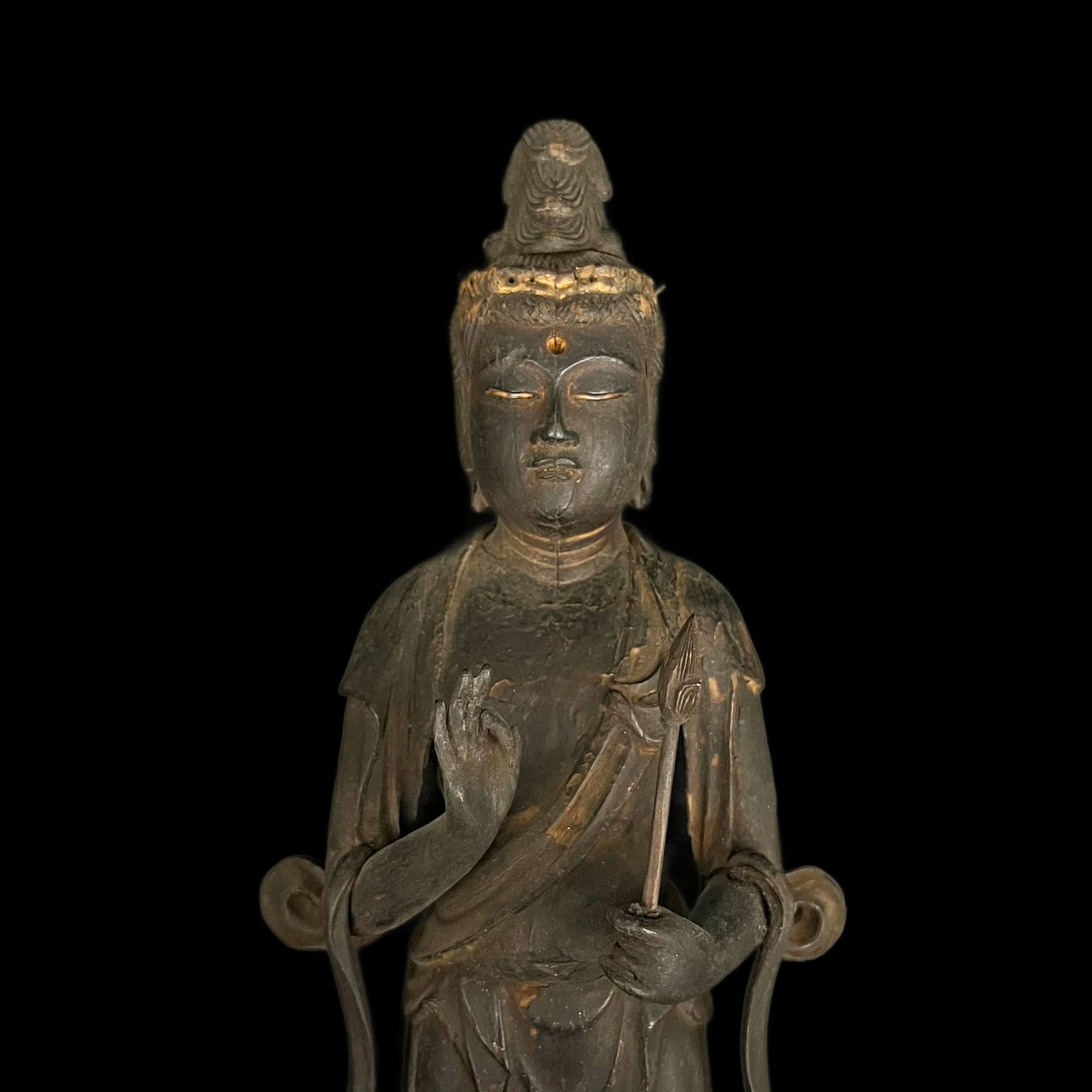
Wooden Sho Kannon bodhisattva from the Heian period
The sculpture was made using a precise carving technique, the yosegi zukuri. The process involved working with several pieces of hollow wood, always carving out each body part first, then fitting them into each other, and only at the very end did the detailed carving begin. This technique not only made the process quicker, but also resulted in lighter objects and the repair of the parts became much smoother and easier. The method is evidenced by the joints found on the sculpture, at the shoulders, head and sides, and, most strikingly, by the crystal-encrusted eyes. As for the Kannon’s appearance, it is both sublime and simple: the high perched headdress, the necklaces and earrings all emphasise his saintly nature, while the scarf and skirt covering his body and the fact that he is barefoot are a testament to his simplicity. His right hand forms a varada mudra (‘gesture of generosity’), symbolising devotion and compassion, while the lotus flower in his left hand is a symbol of enlightenment, spiritual awakening and purity.
The Heian era, meaning “peaceful”, was indeed a calmer period in the country’s history as Chinese influence declined, allowing national values and culture to flourish. In terms of Buddhism, this was the time of the emergence of the Tendai and the Shingon, both esoteric sects, with the Tendai advocating the attainability of enlightenment by all living beings and the Shingon emphasising the importance of symbols, rituals and incantations.
Bodhisattva:
A bodhisattva is an enlightened being who has gone through each stage of the bodhisattva path in order to attain buddhahood. Initially, only those who vowed to become Buddhas and received blessings from a previous Buddha could become a bodhisattva. Kannon, depicted in the statue, is also a bodhisattva, a guardian-protector saint who has a prominent place in Japanese Buddhism and whose most important task is to help people in distress. Sho Kannon is, moreover, a “holy” Kannon, who, of all the other Kannon, has the most human form. He usually takes on an appearance similar to Siddhartha, and is often depicted alongside Amida Buddha as compassion itself, and if Daiseishi Bosatsu joins them, Sho Kannon becomes wisdom instead of compassion.