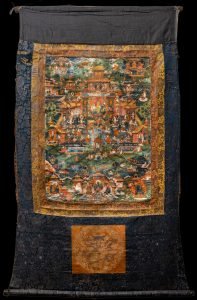
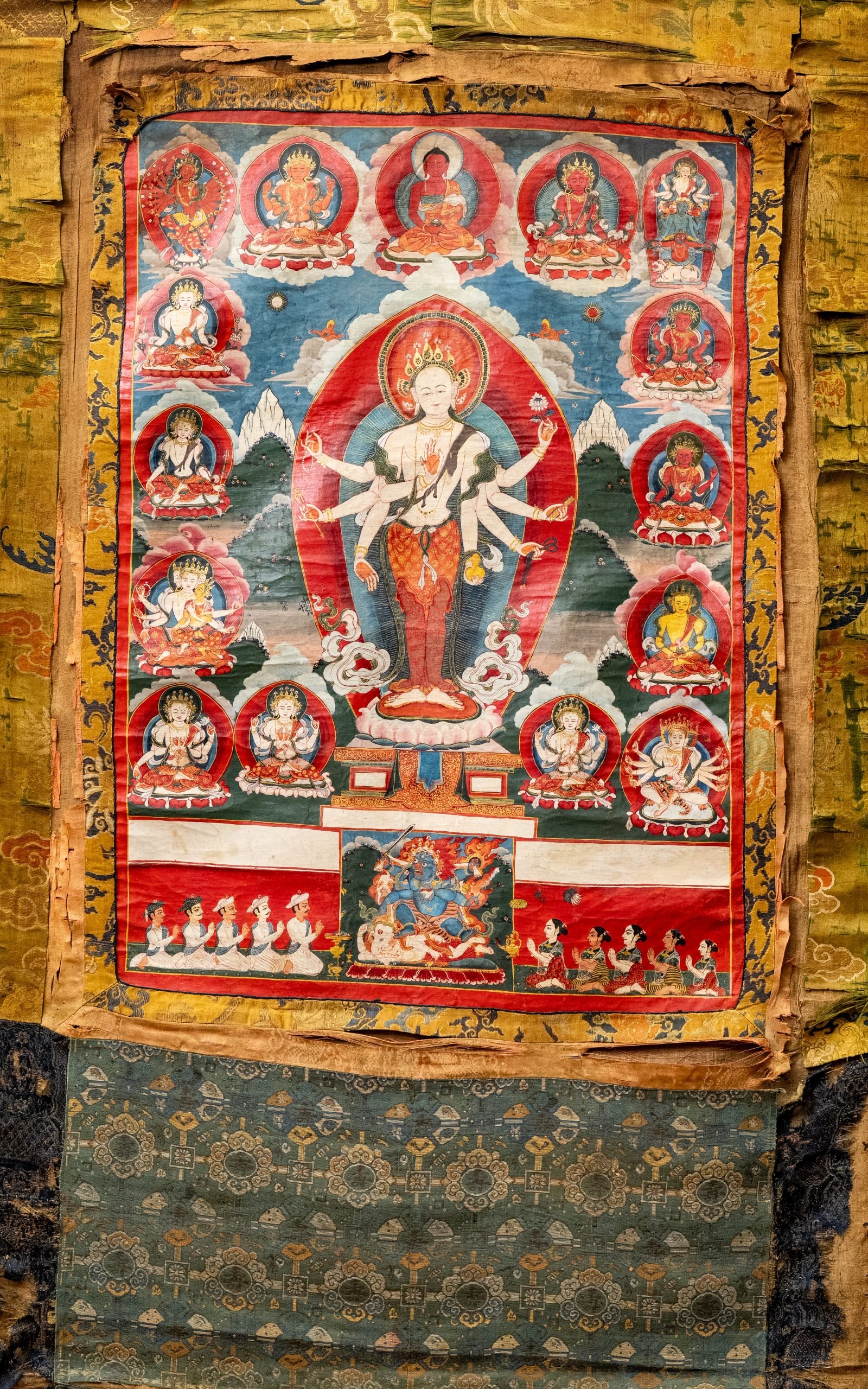
Dimensions: (image+silk frame) 129x82cm , (image) 76×55 cm
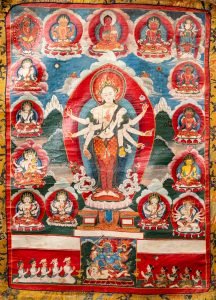
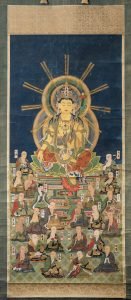
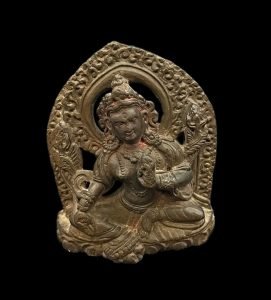
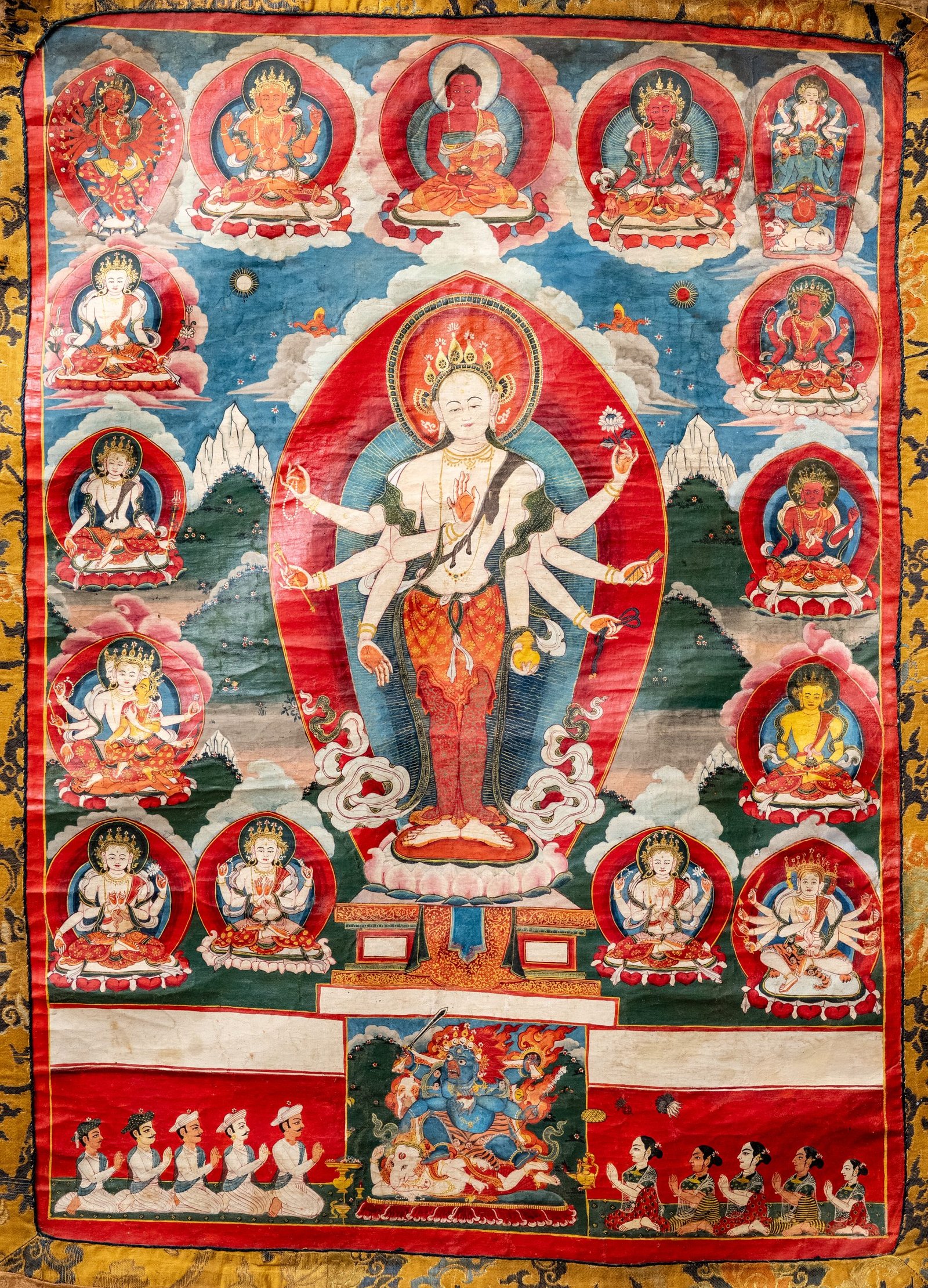
18th century Nepalese thangka of Avalokiteshvara (Bodhisattva) in the middle. Avalokiteshvara is one of the most important characters in Mahayana Buddhism, who, as a Bodhisattva of compassion, seeks to alleviate the suffering of all beings. The many arms symbolise his ability to reach out and help everyone in countless ways. In his left hand: padma (lotus flower), fan, pasha (lasso rope), and kalasha (vase holding the nectar of immortality). In his right hand: mala (meditation necklace) and a sceptre; and one hand forms abhaya mudra (protection offered by deity) and the other varada mudra (symbol of compassion and benevolence). On his head he wears the crown of the “Five Dhyani Buddhas”, each Buddha symbolizing an aspect of enlightenment. Around Avalokiteśvara are figures of Mahakala, Garuda and several other bodhisattvas.