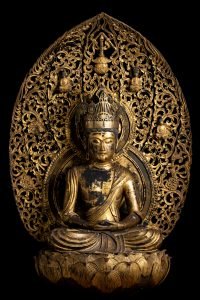
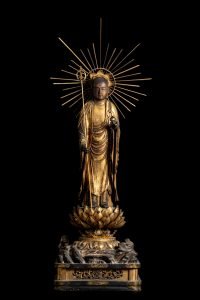
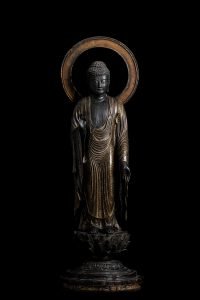
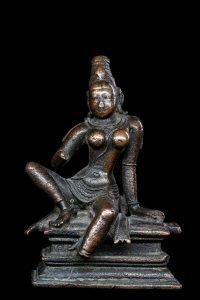
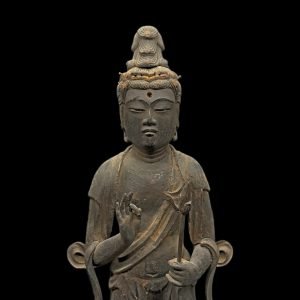
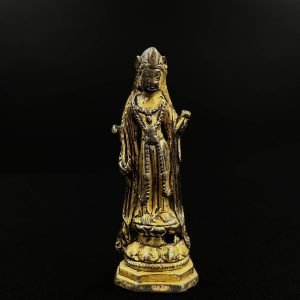
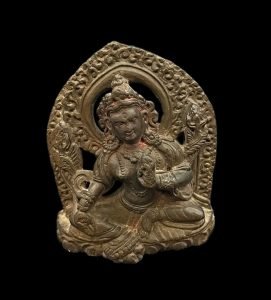
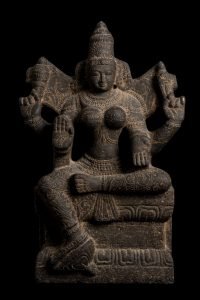
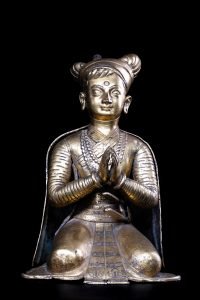
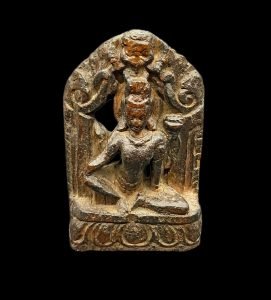
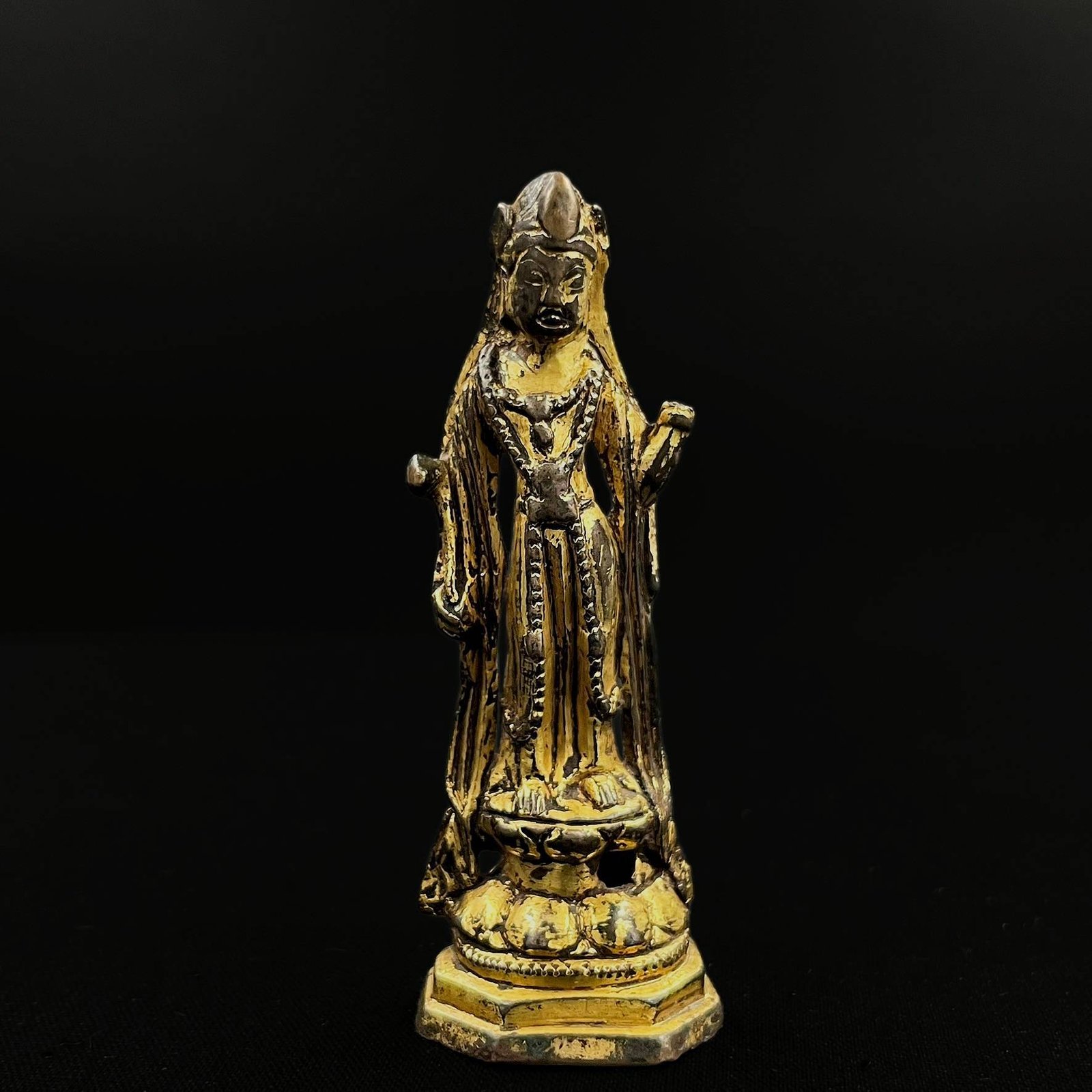
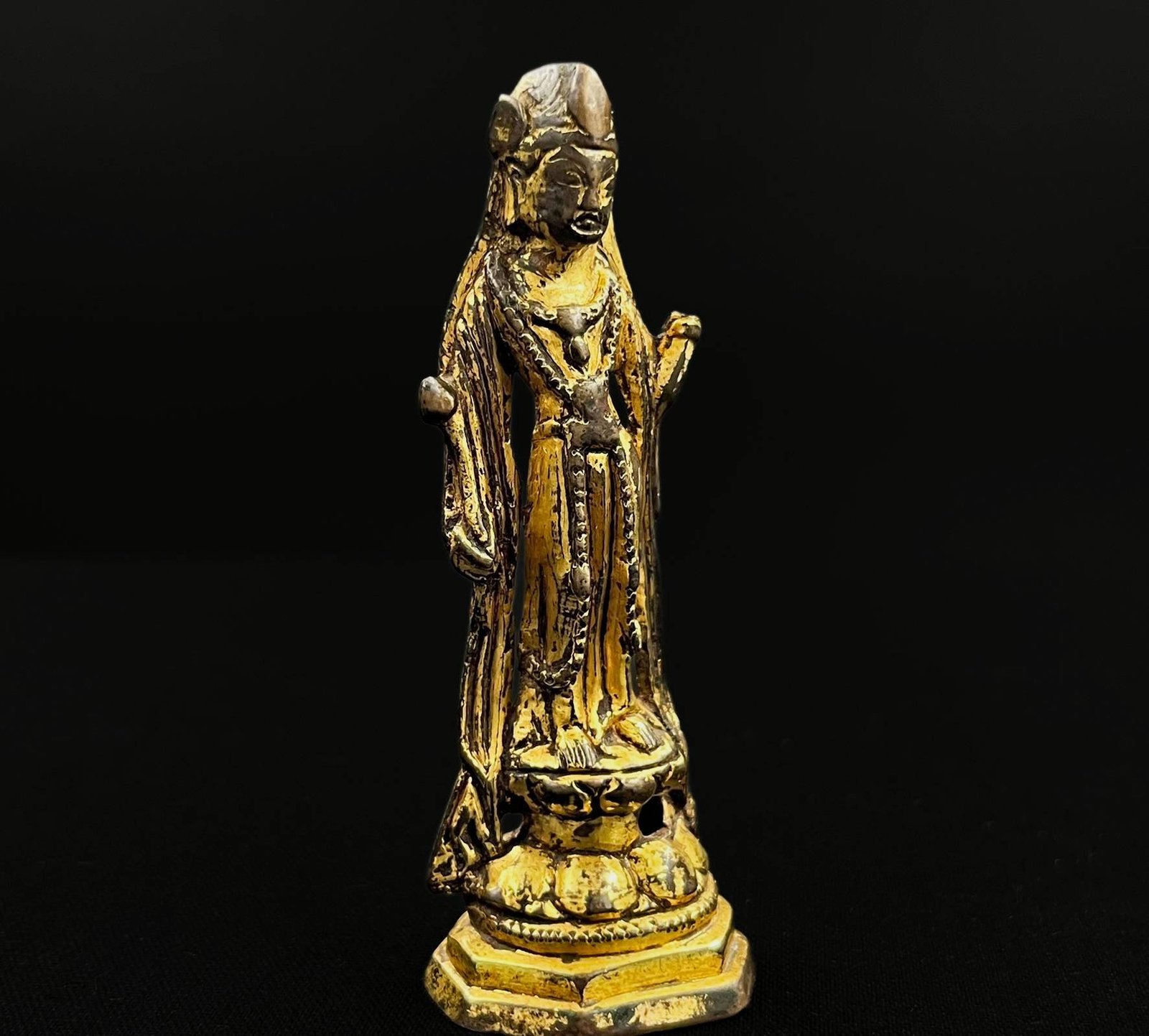
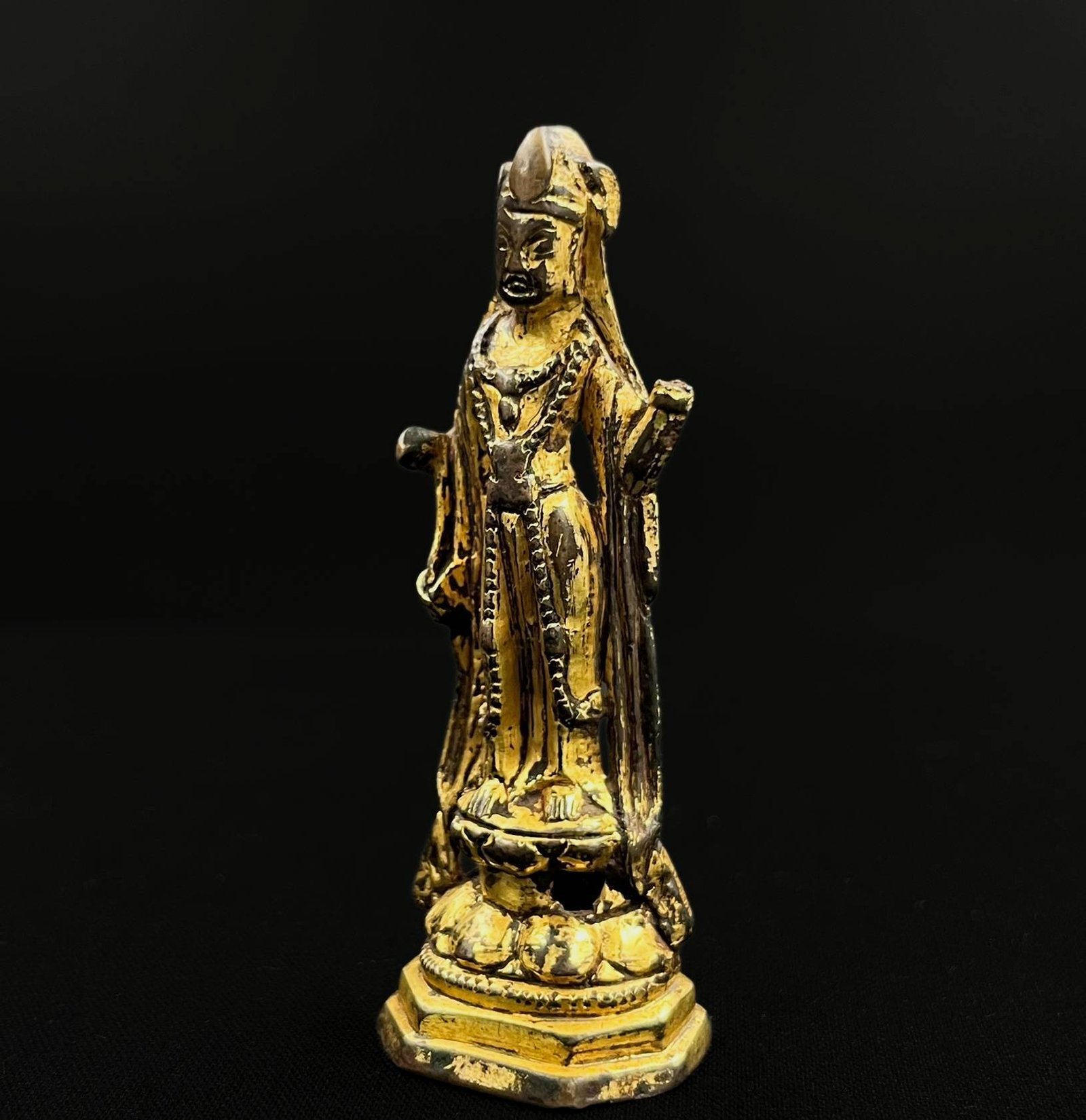
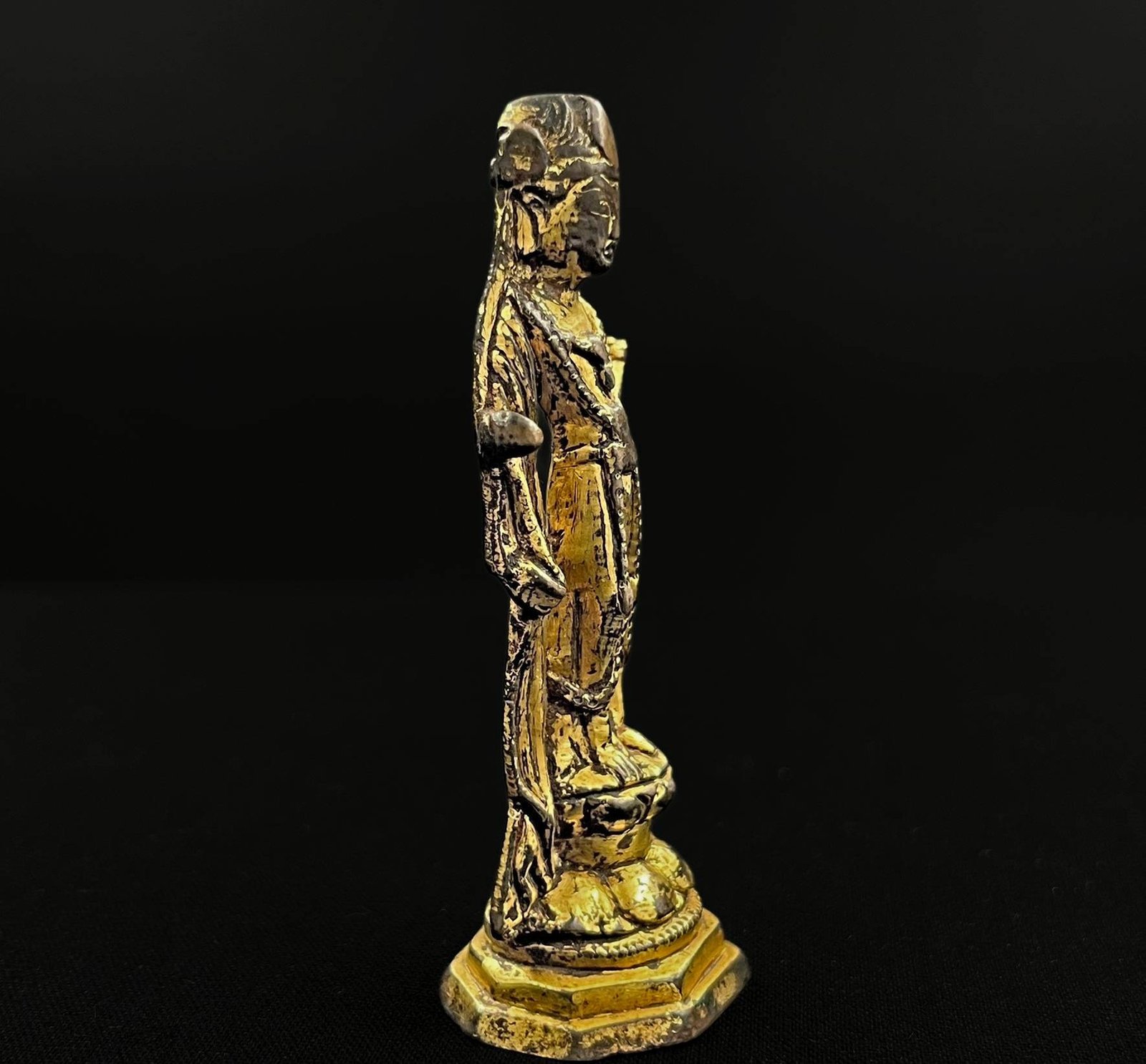
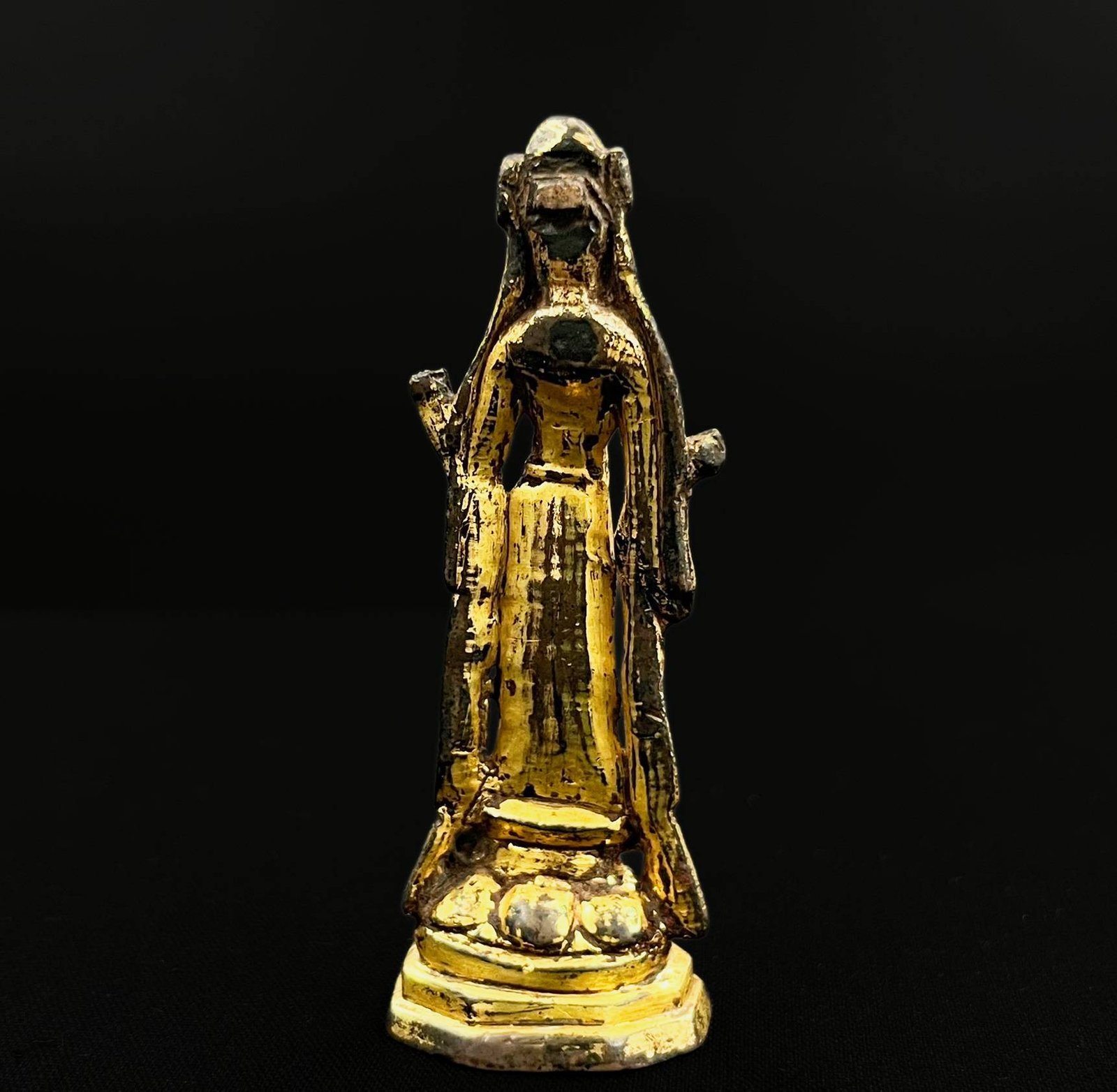
The statue depicts one of China’s most beloved bodhisattvas, Guanyin. The deity is genderless, sometimes depicted as a man and sometimes as a woman, but in China Guanyin is most commonly depicted as a woman in white; she wears a number of necklaces around her neck and usually holds something in one or both hands. This Guanyin gives the impression of a woman, with a very feminine curved body (in lola hasta mudra). The richly detailed face is also a testimony to the artist’s high level of skill, as such miniature sculptures are exceptionally difficult to work with. Unfortunately, the back of her left hand is partially missing, but in her right she holds a lotus flower, a symbol of purity. She wears a high crown, a heavy necklace and an elegant dress that touches the double lotus pedestal.
The statue is from the Sui dynasty (around 6 – 7th century) which period is quite significant in buddhist history because the religion started to spread rapidly across China due to the construction of the Grand Canal. The Sui dynasty managed to politically soften the atmosphere, hence the economic and social progress and the Grand Canal not only facilitated the flow of grain and business but also the fusion of cultures. In China, it was the Vajrayana Buddhism that dominated the most and in the buddhist schools, they canonised the religion itself and also the appearance of Buddha as well. Before this, the adherents used the Sanskrit Sutra as guidance in faith. In other words, the years of peace let the culture flow and bloom.