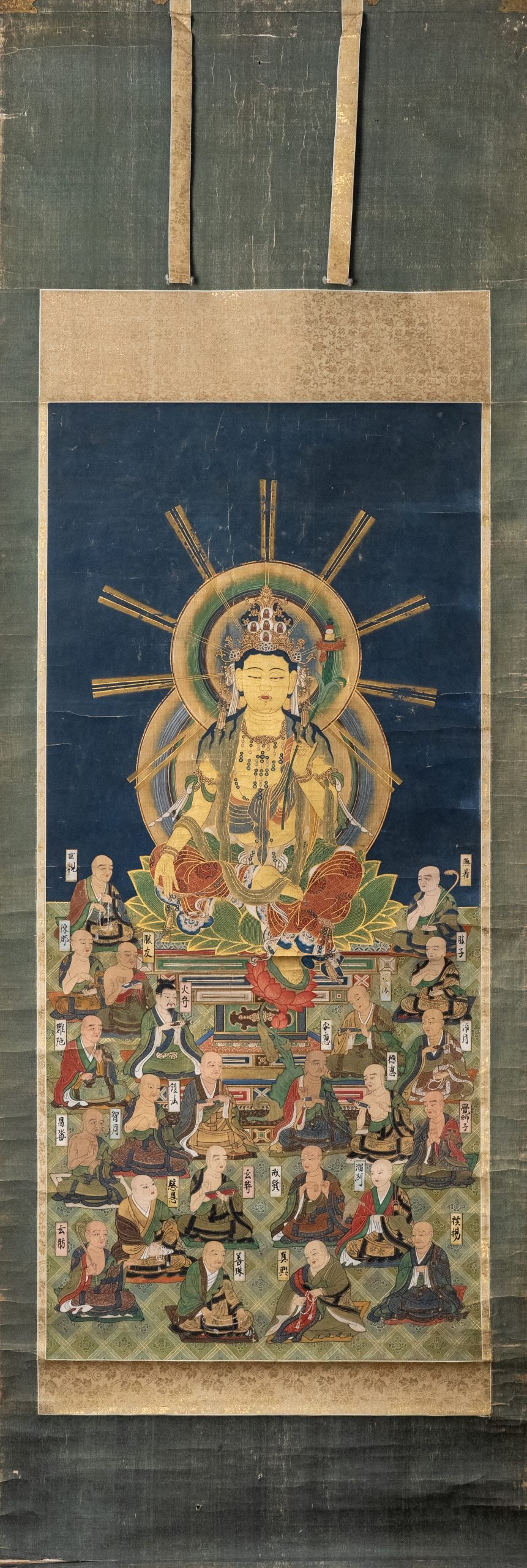
Dimensions: 51 x 113 cm and 64 x 186 cm (with the mounting)
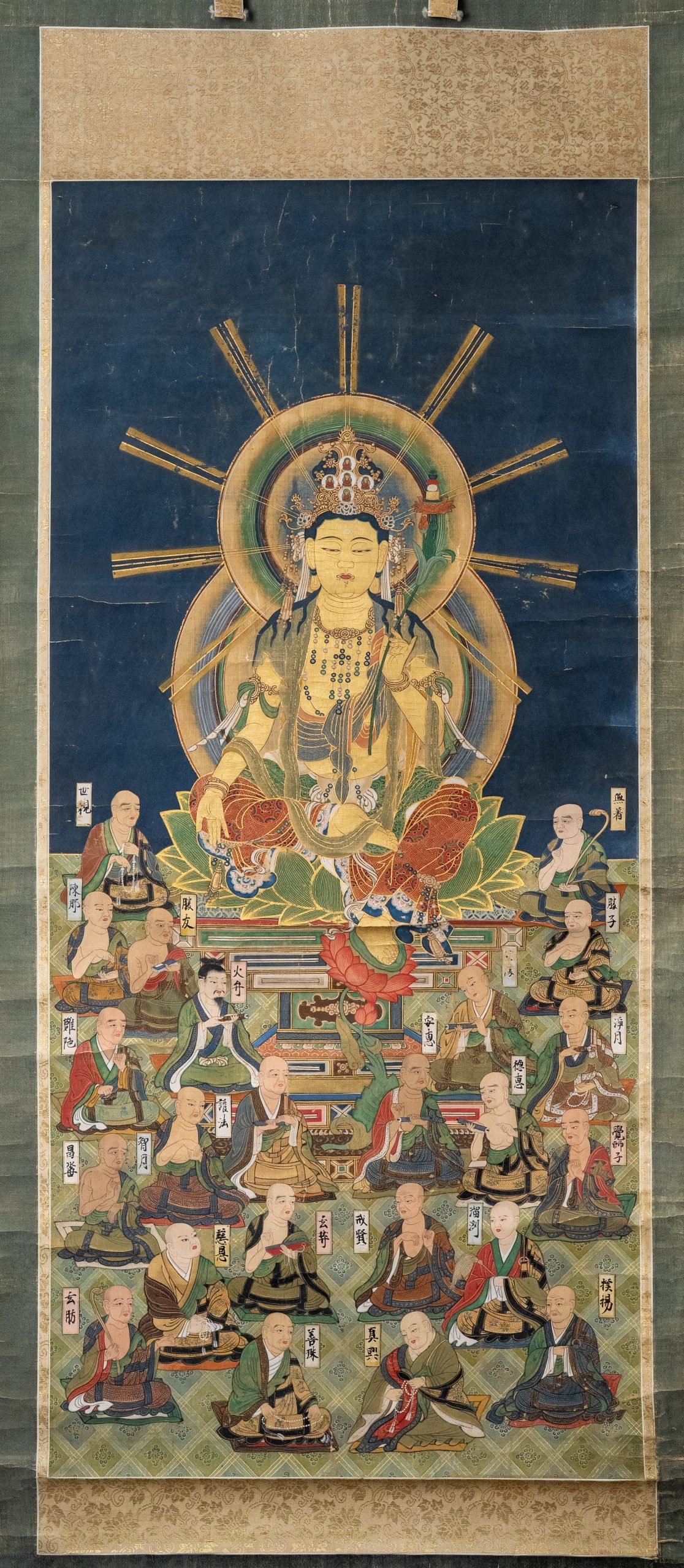
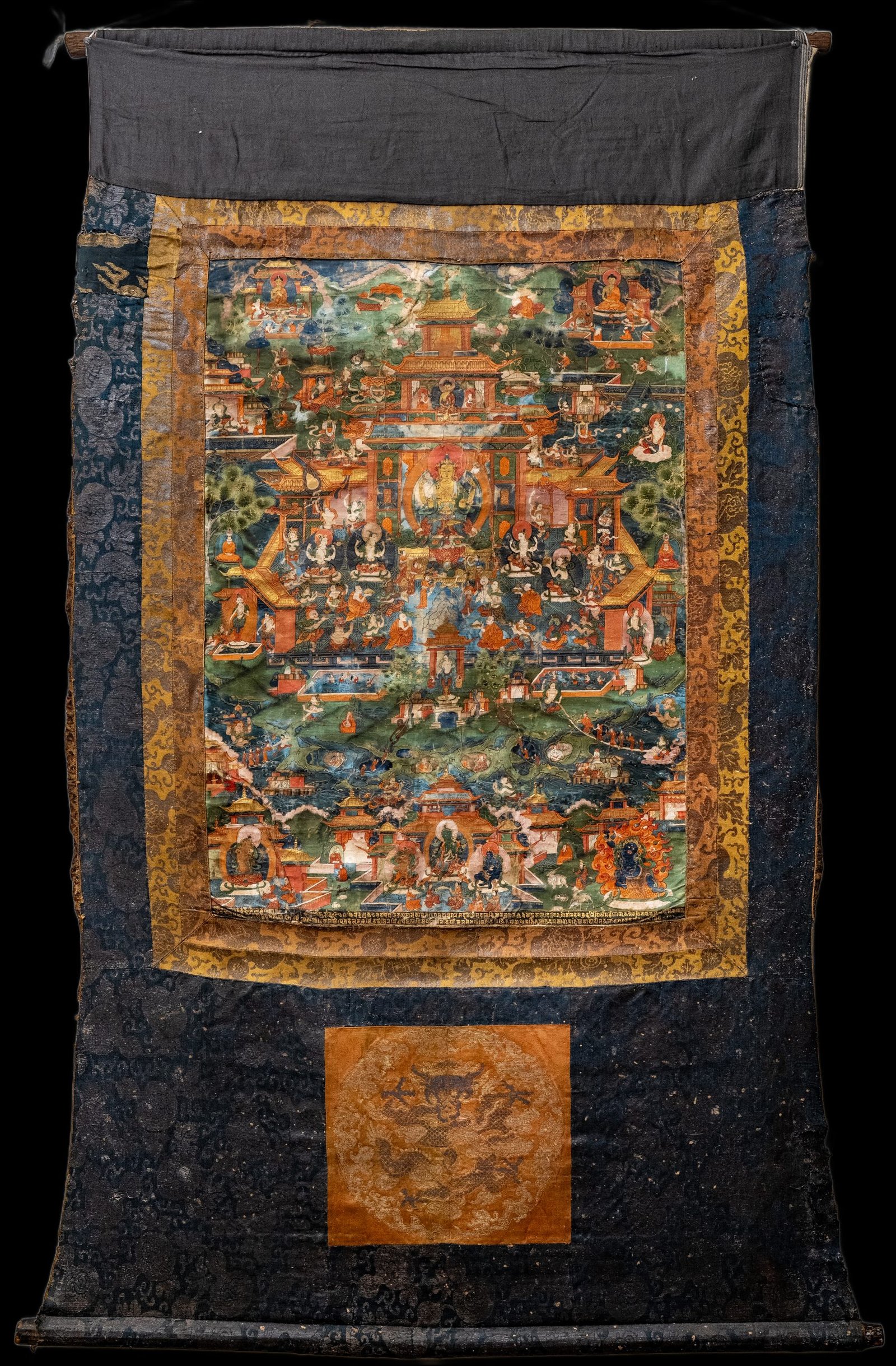
Hossō Mandala from 16th century Japan, made by an unknown artist. Being in the center, there is Miroku Bosatsu who is also called as Matreya bodhisattva, the future Buddha to come down to Earth, the founder of the Japanese Hosso school. His divine nature is depicted with even two circles of aura around his body and head and he also wears a traditional crown. The left hand forms vitarka mudra (‘circle of infinite teaching and learning’), the right hand forms varada mudra (a symbol of compassion and benevolence). Surrounded by the 23 patriarchs of the school, each with their name beside them.
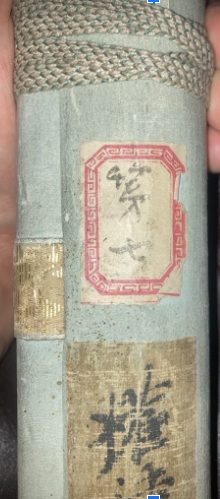
The word “seventh” in a red circular shape on the side of the scroll indicates the serial number of the scroll; probably 7 Mandalas were made from this scroll.
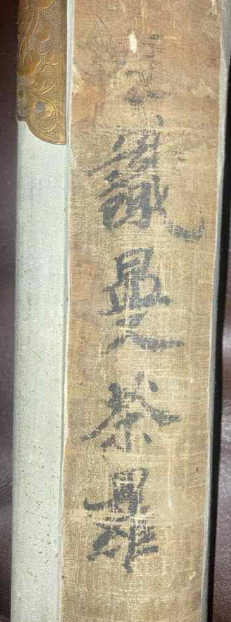
The writing on the scroll: 唯識曼荼羅 or Yuishiki Mandala actually means the Sanskrit word “Yogacara”. The explanation of this phenomenon is that the Hossō school/teaching is a direct continuation and development of the Indian Yogacara (or Vijñānavāda) philosophy teaching – where they focus on how consciousness shapes our perception of the world surrounding us.