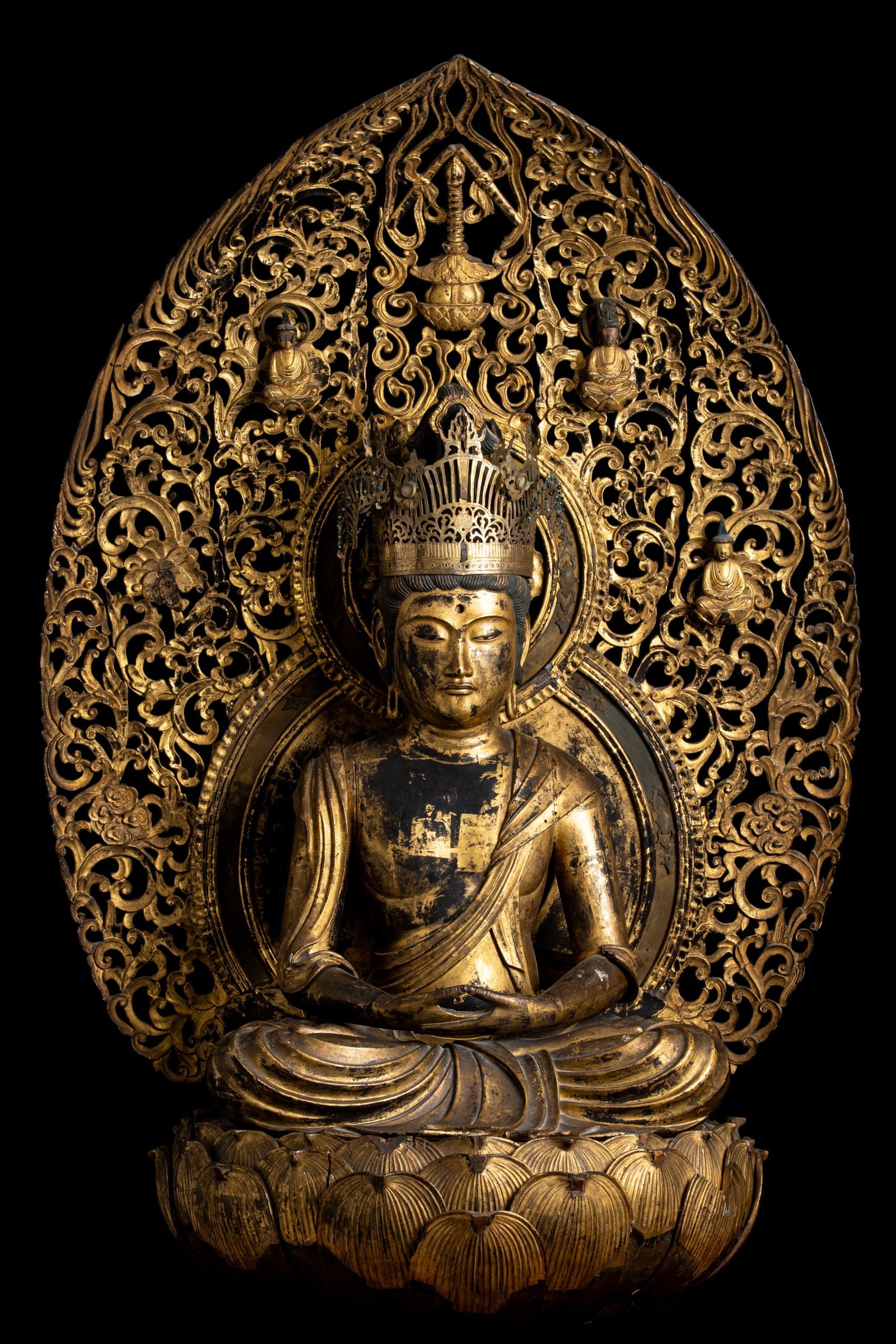
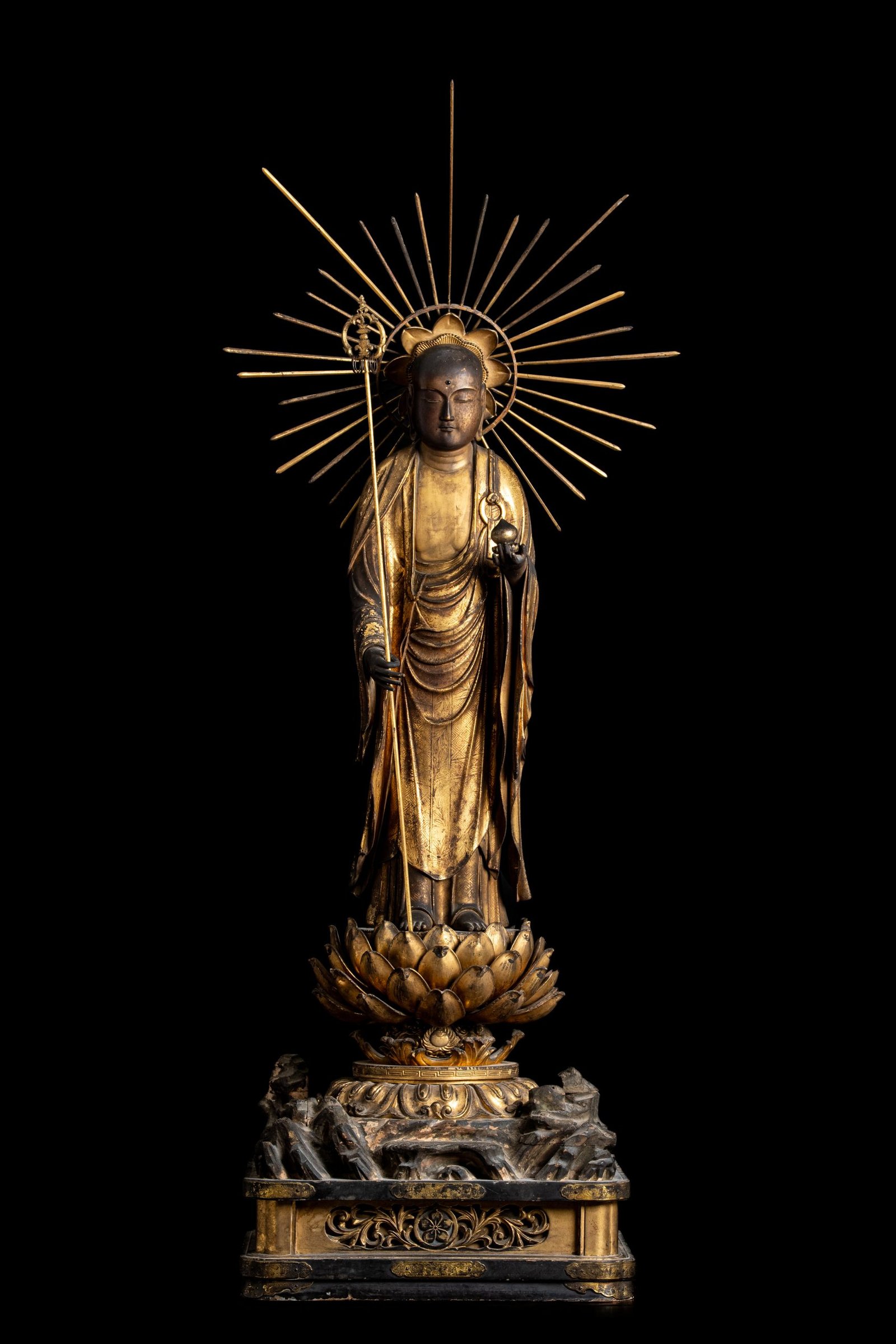
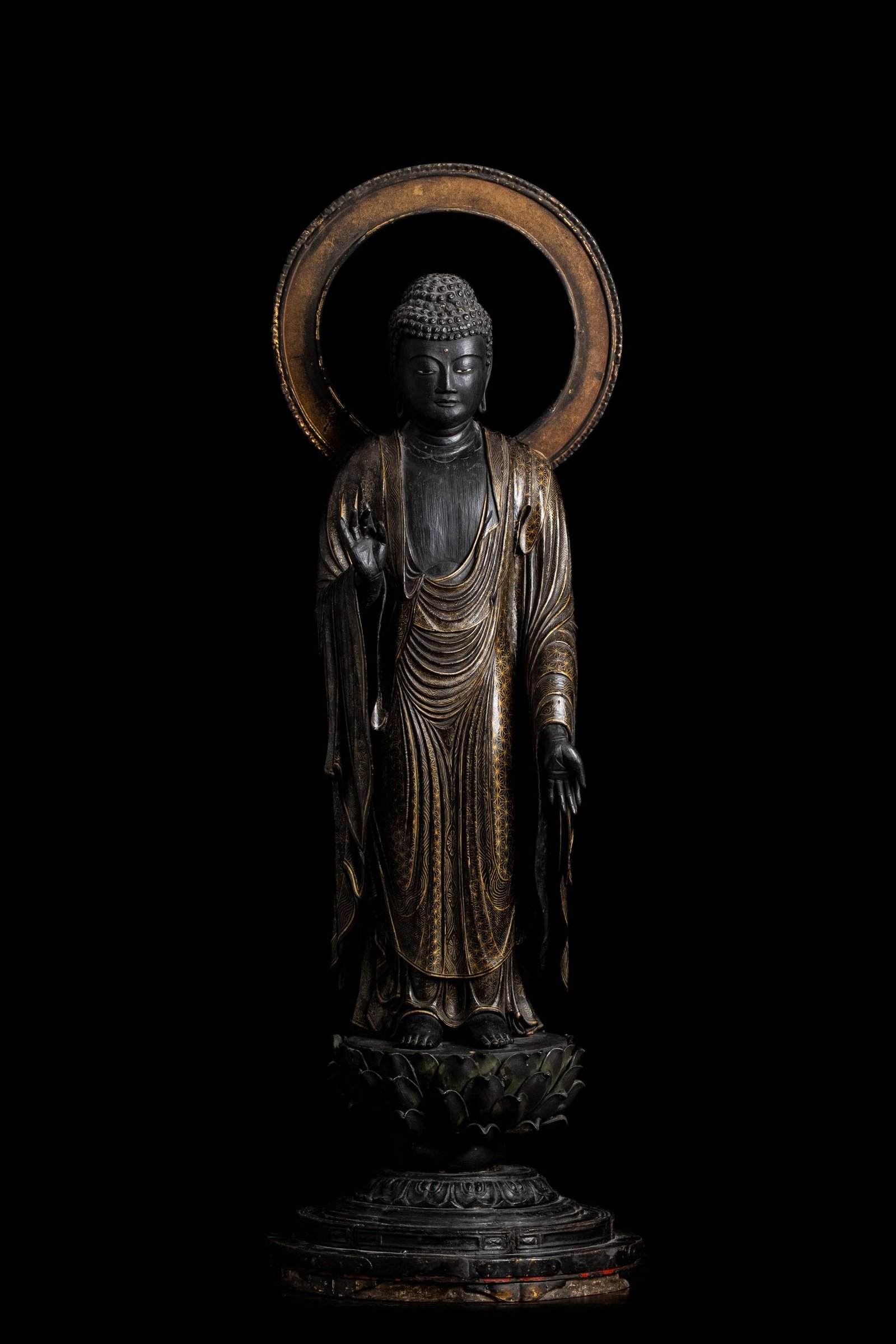
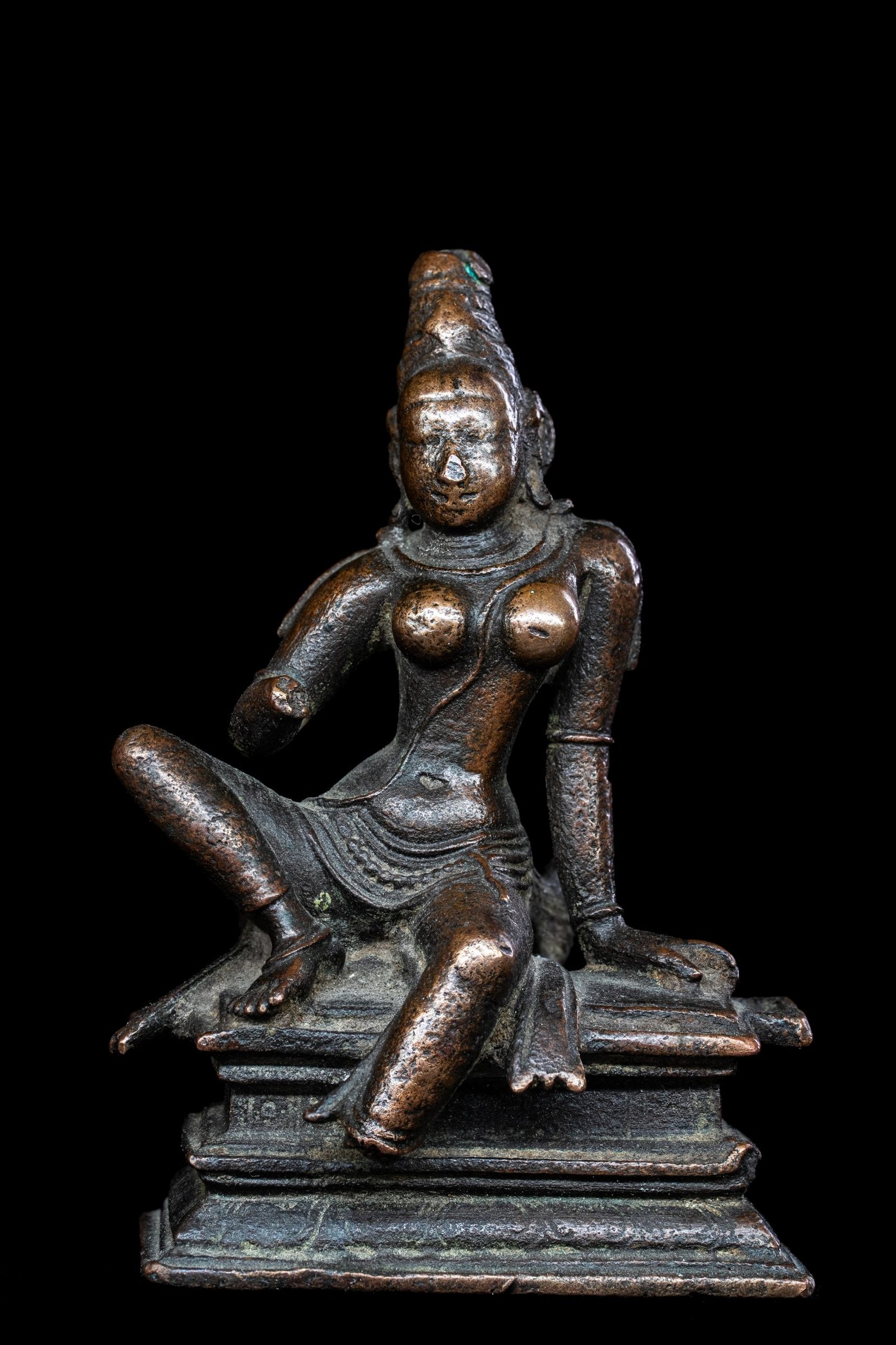
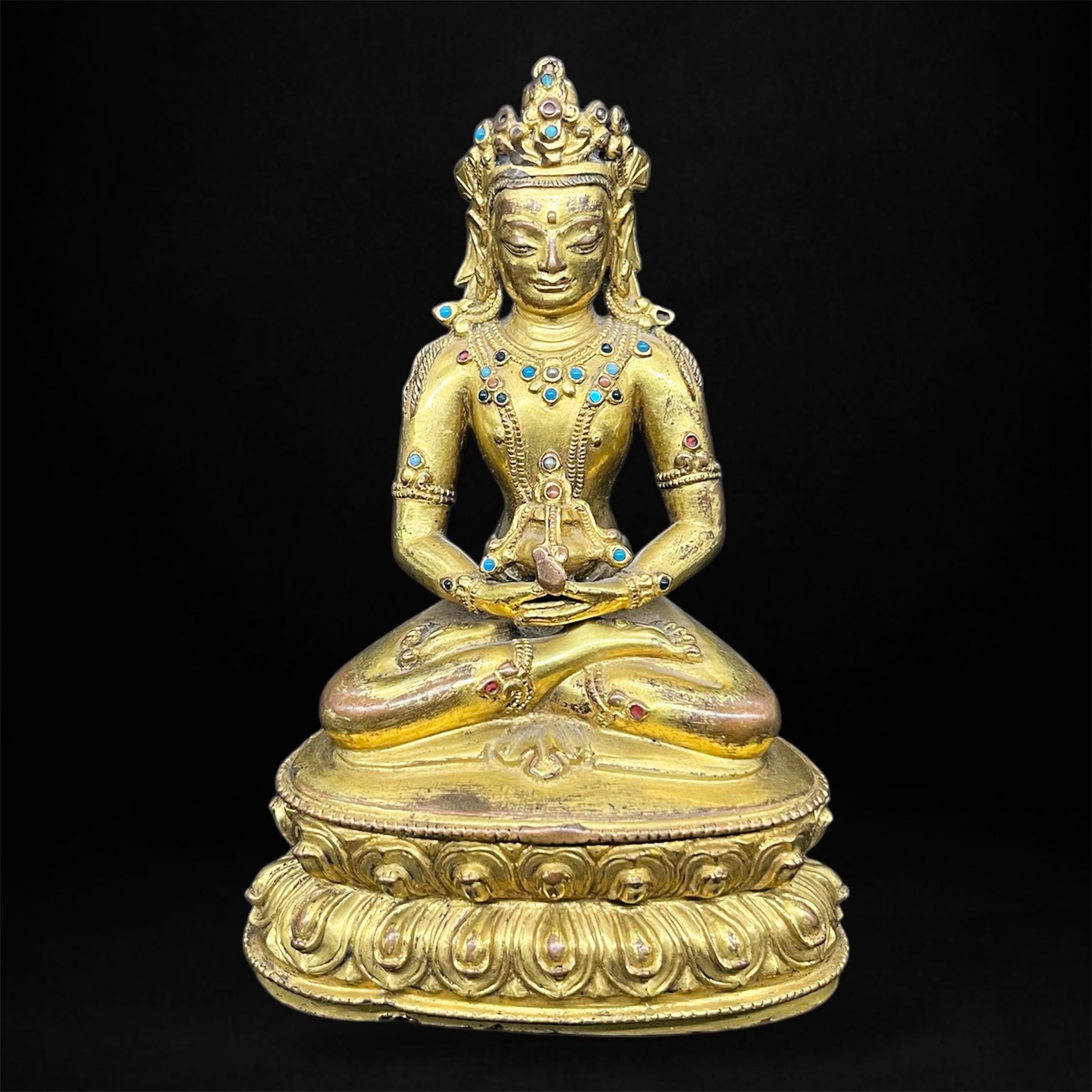
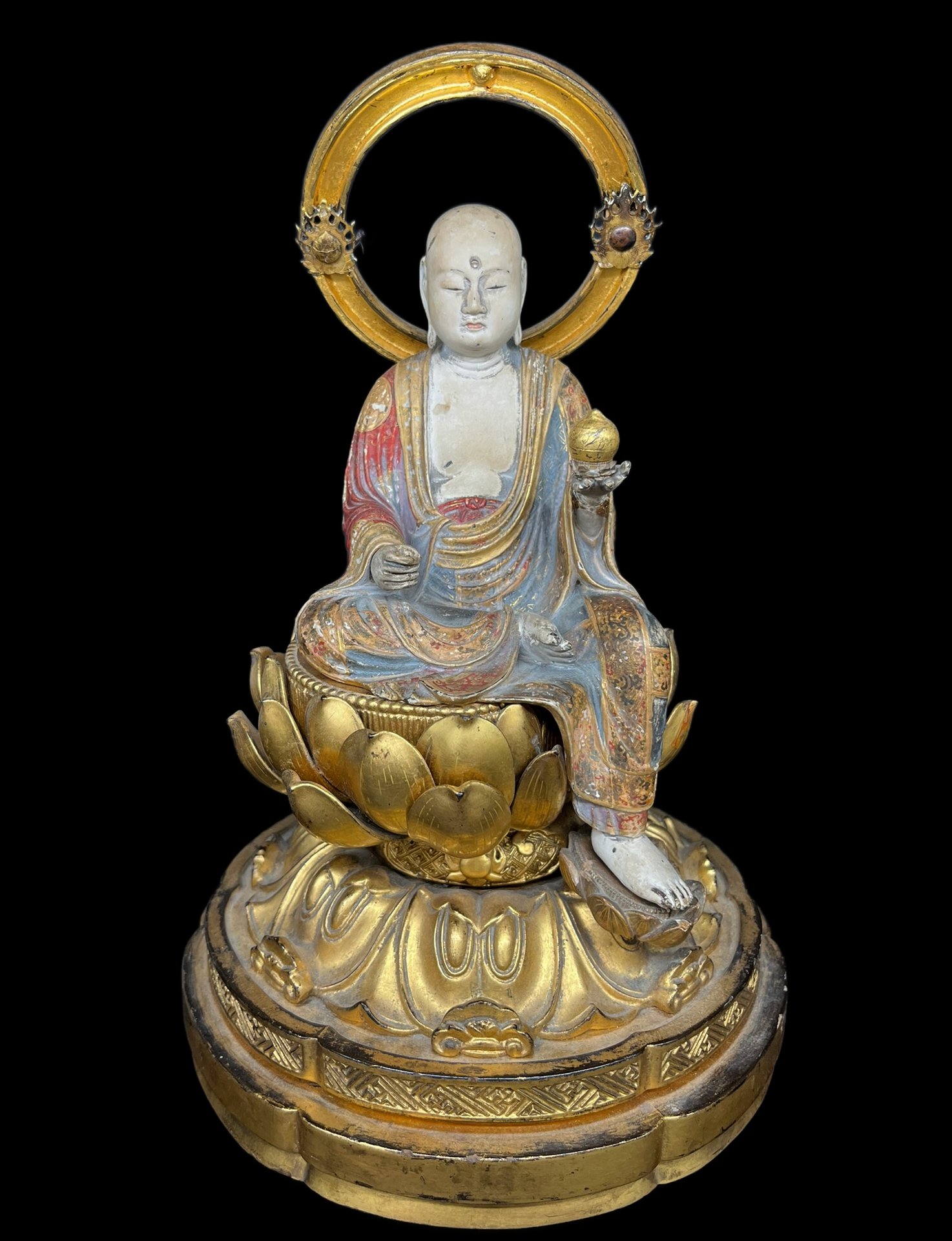
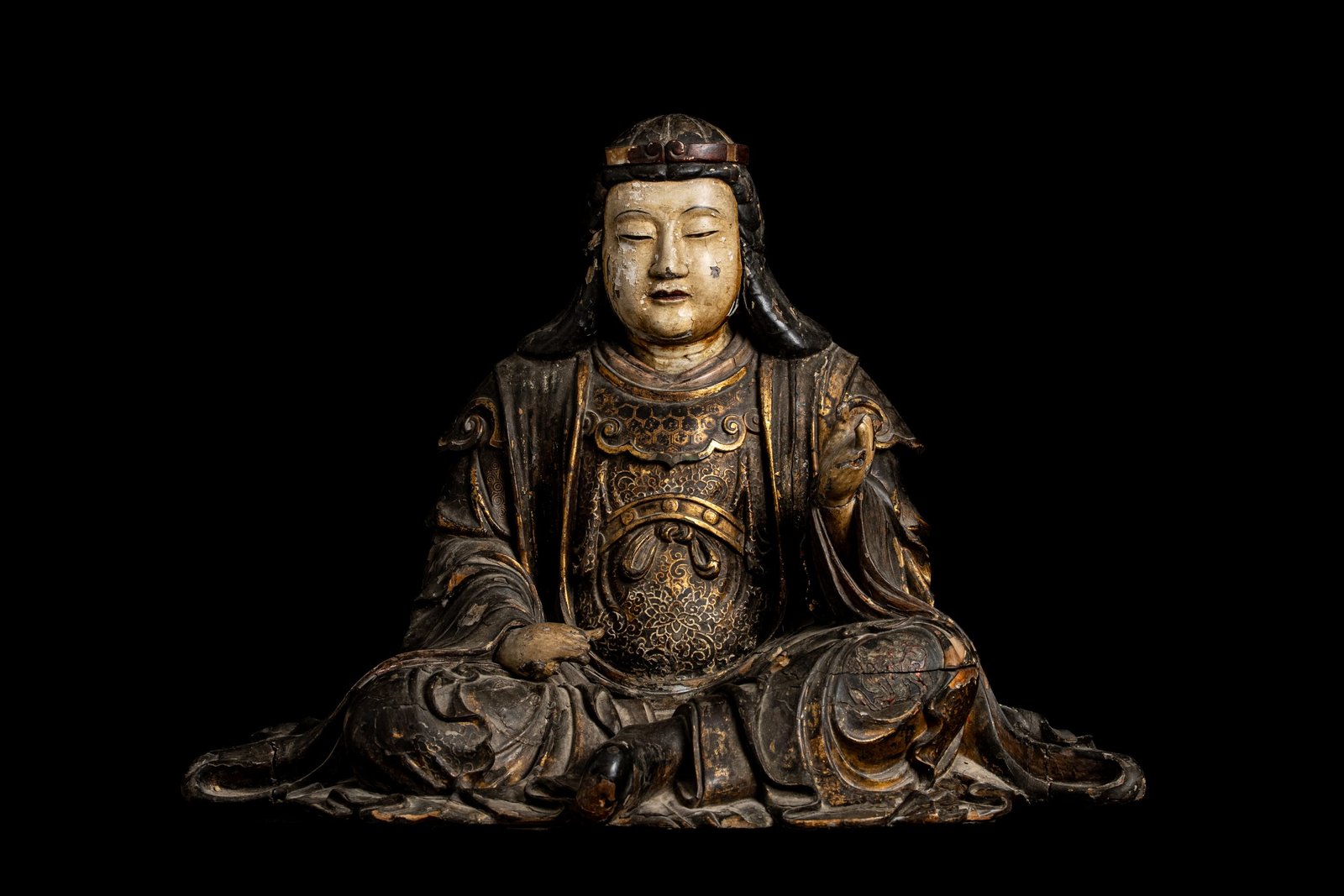
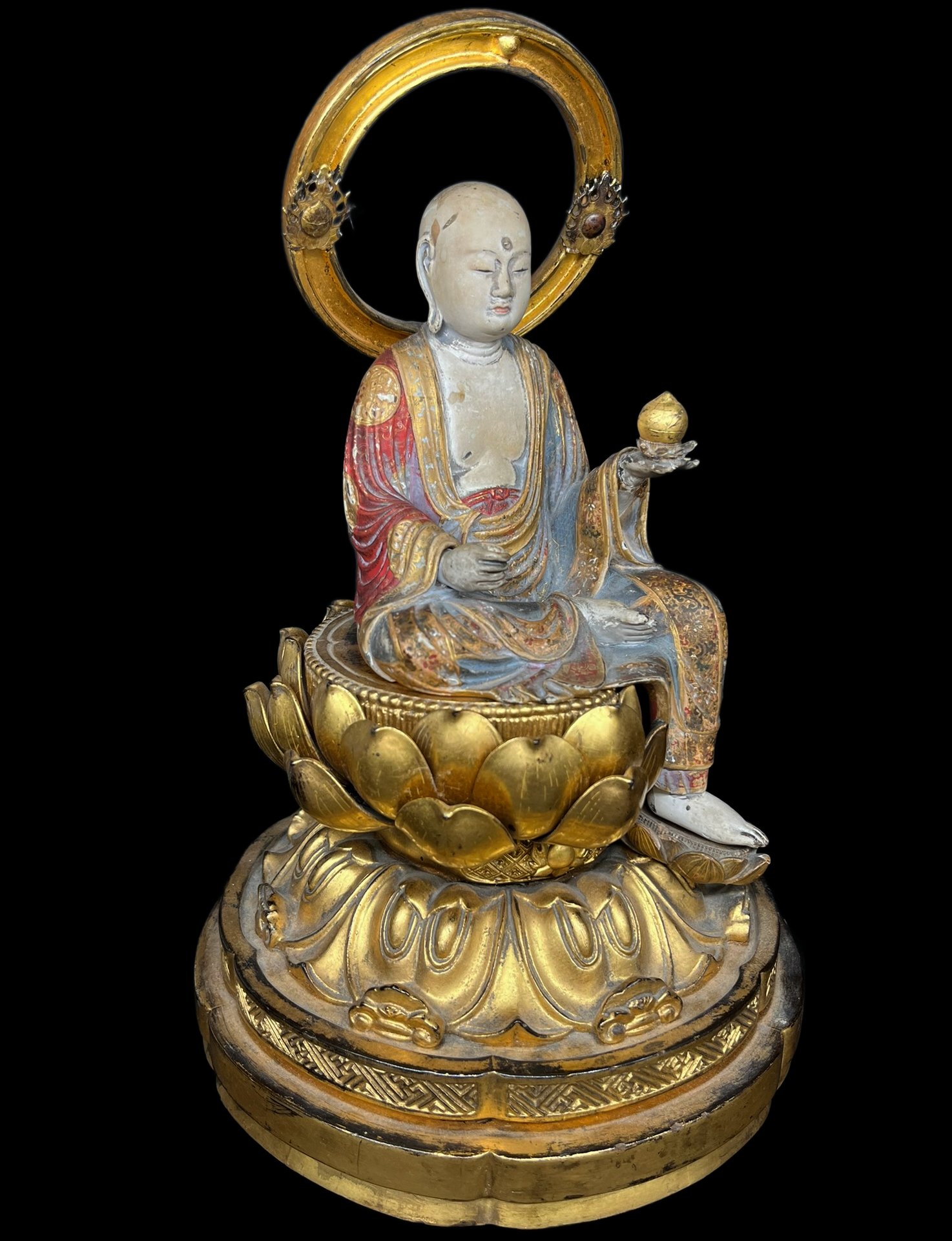
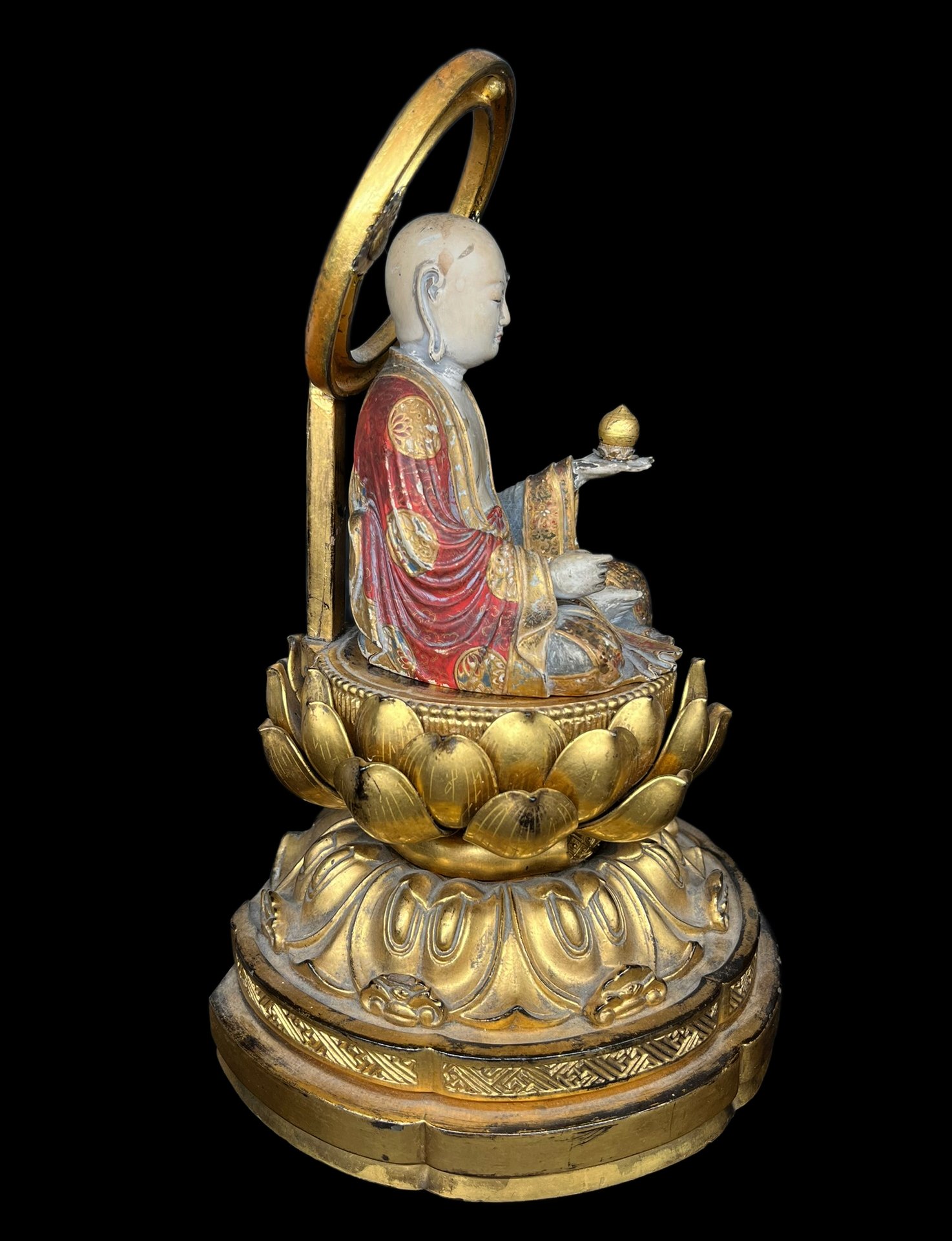
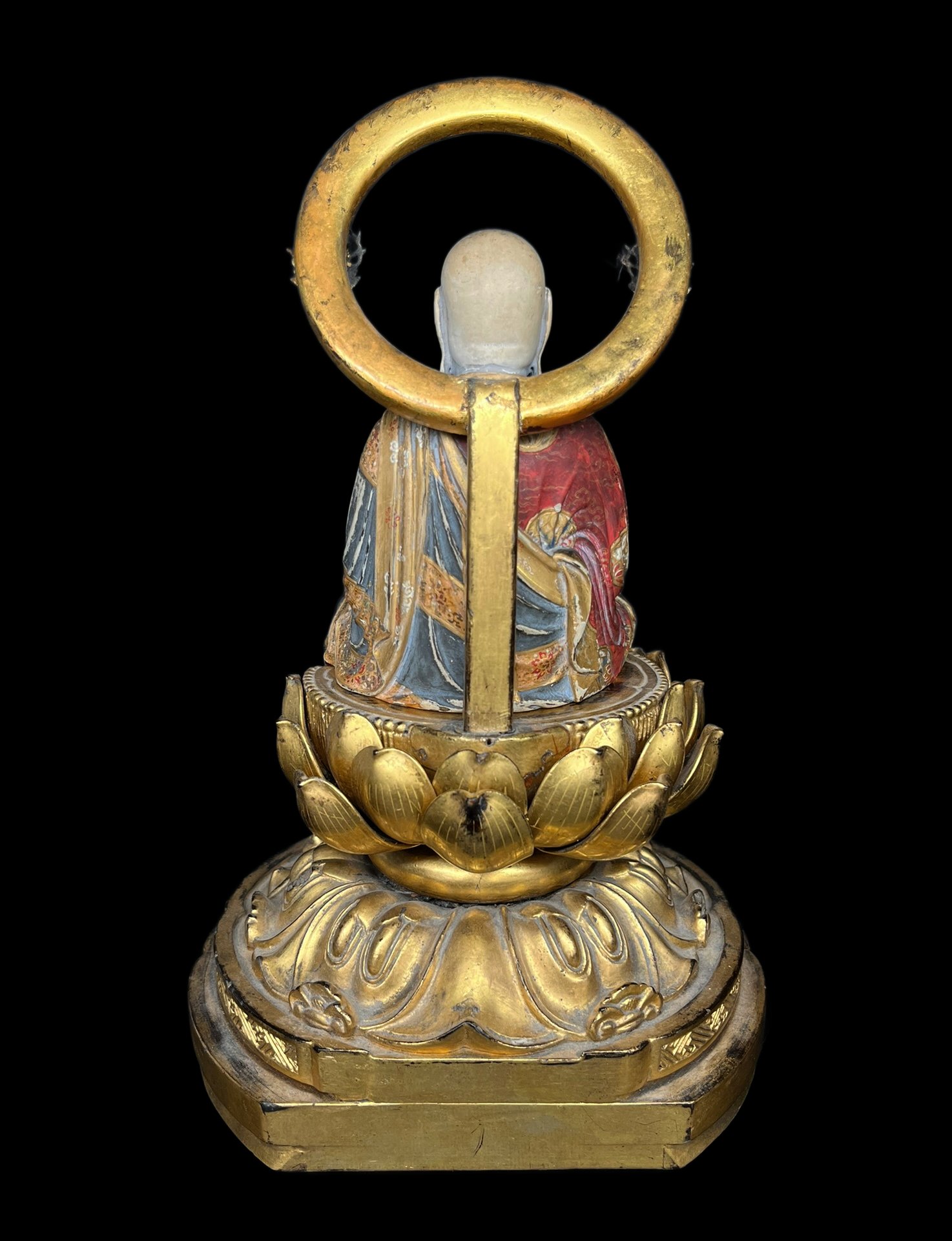
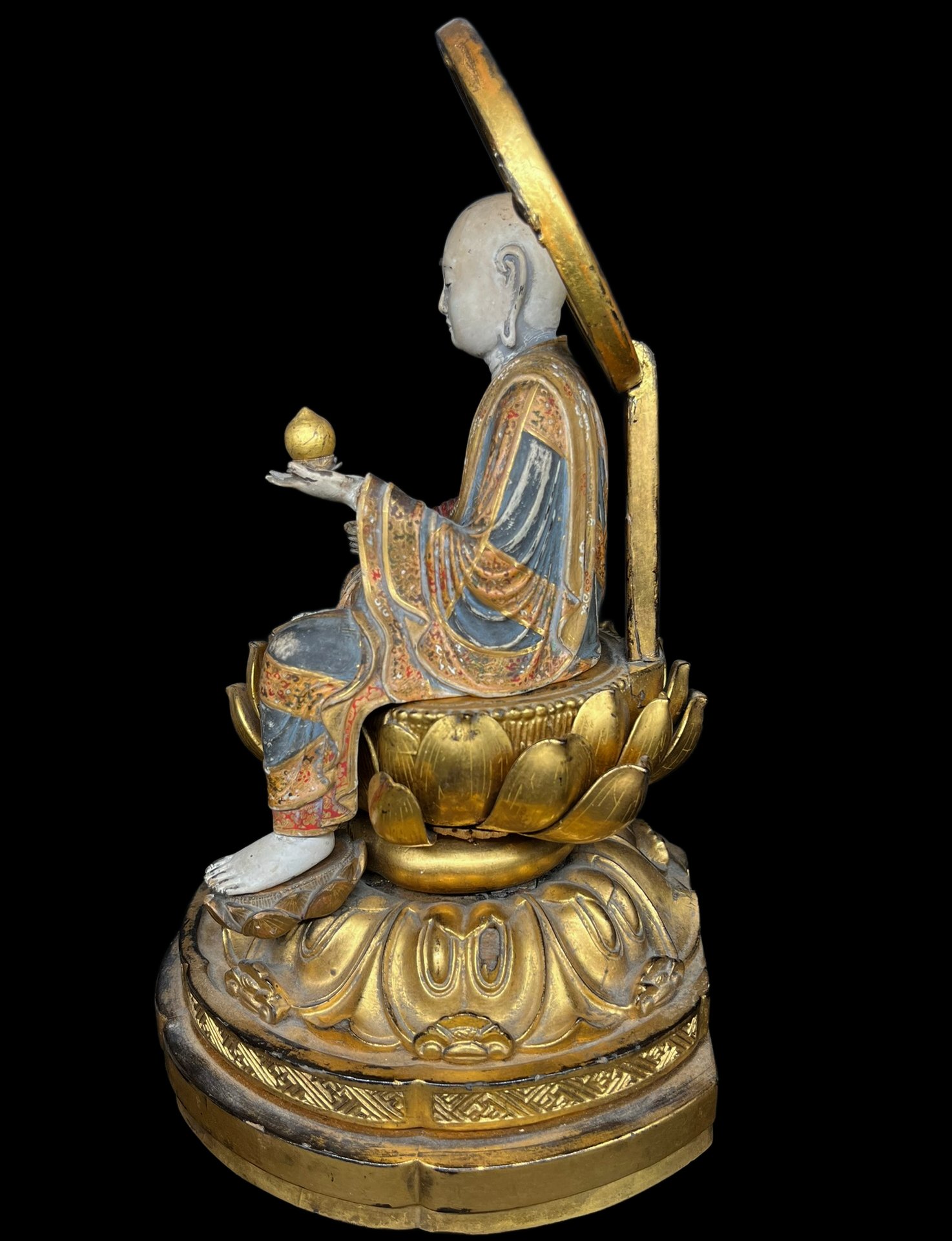
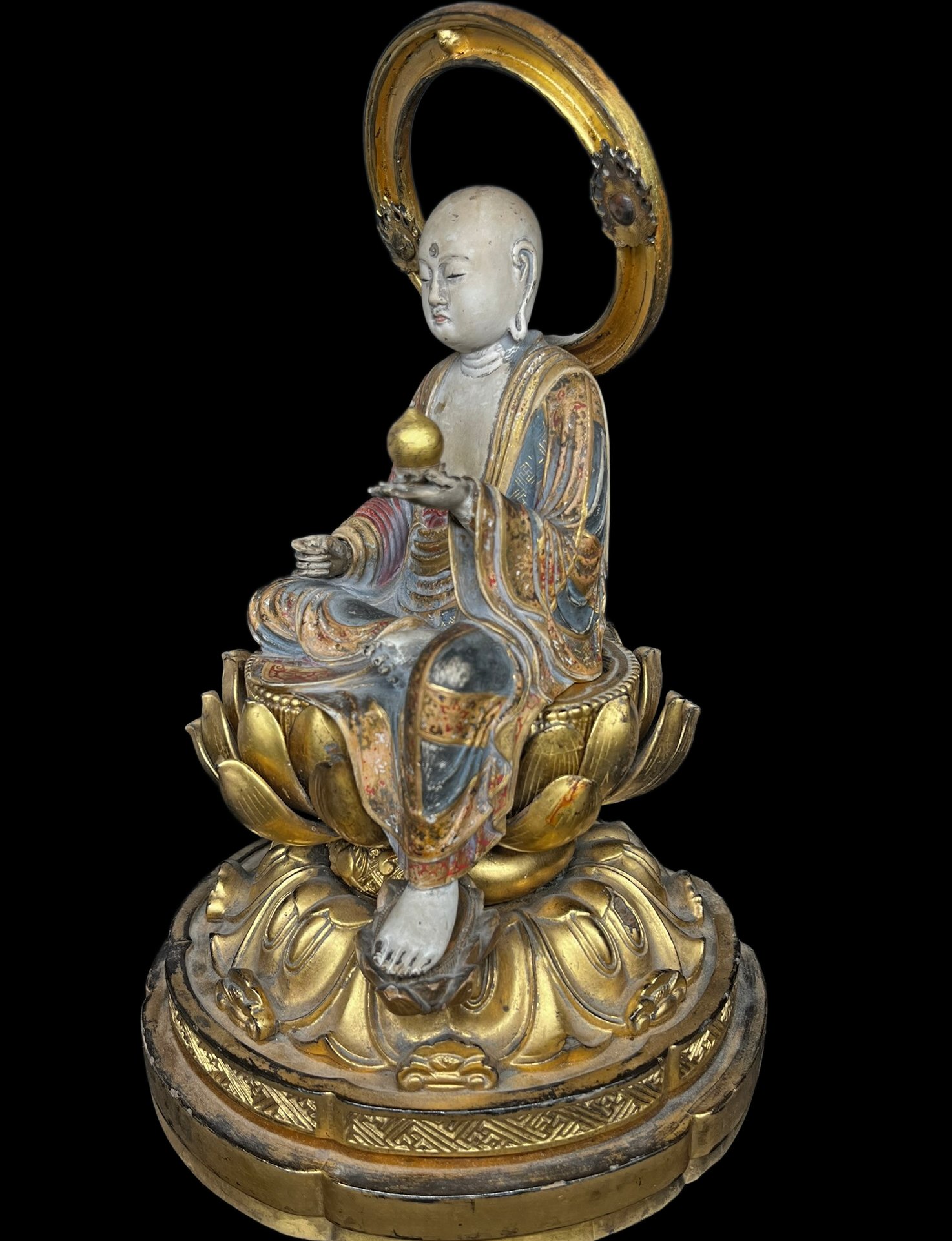
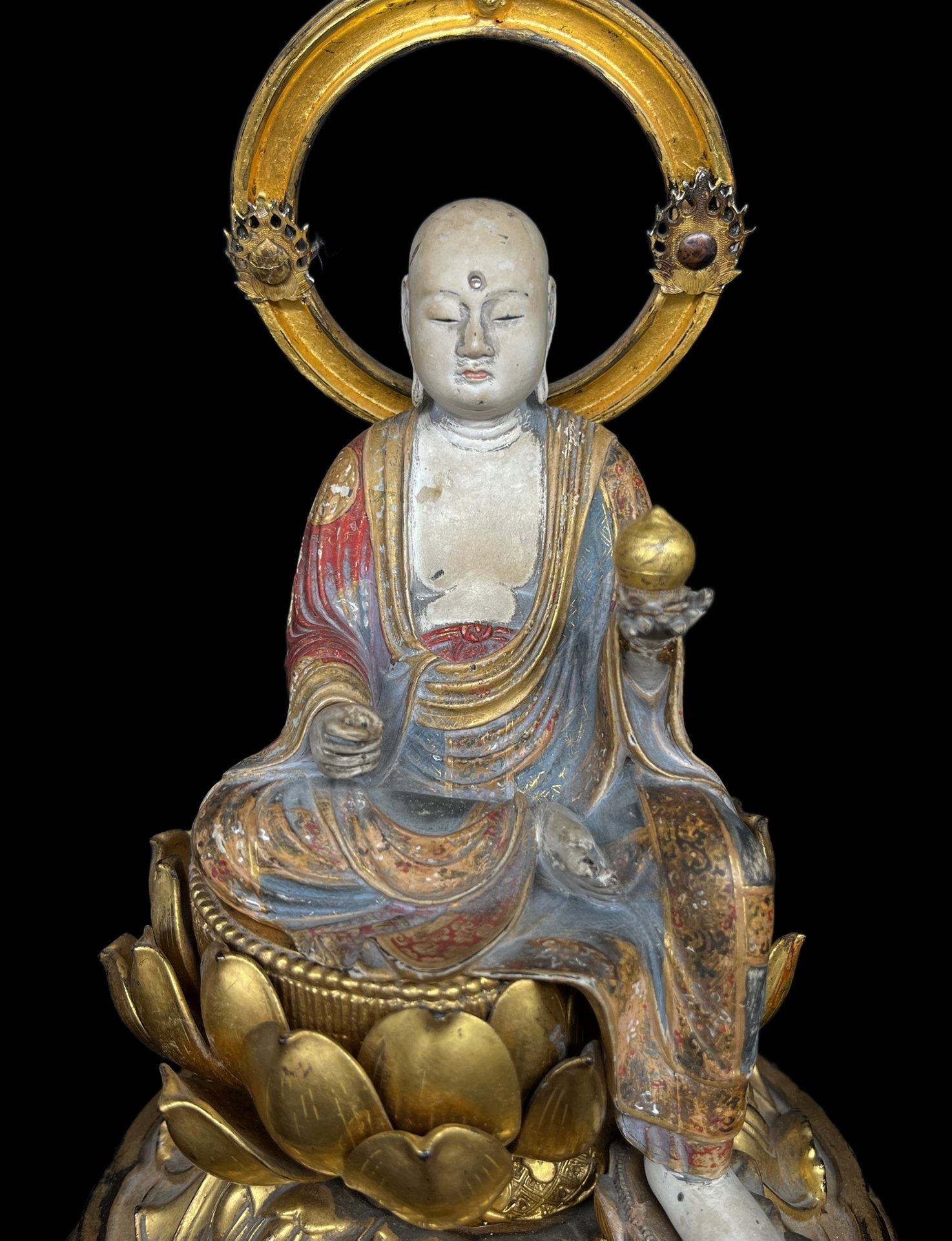
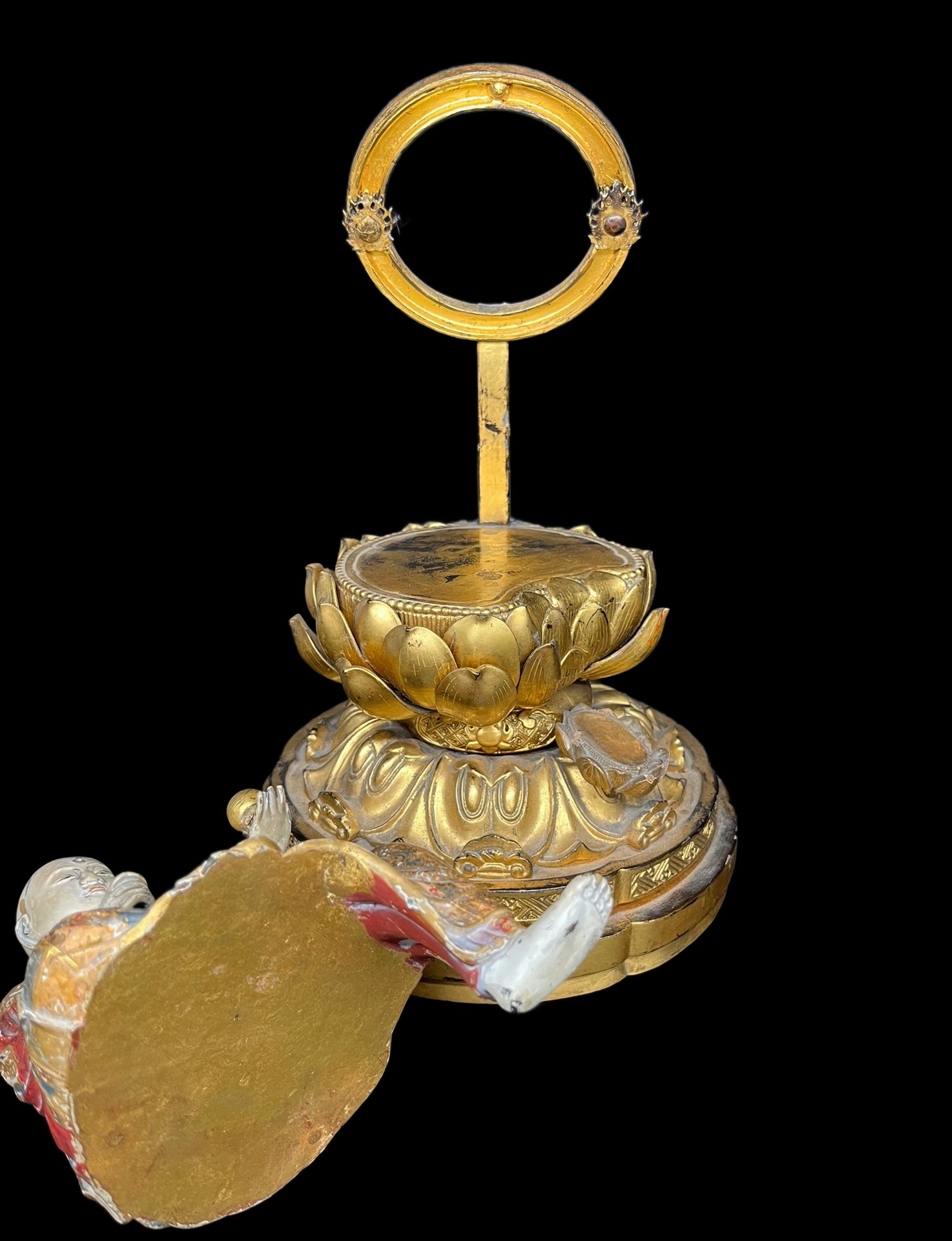
Polychrome wooden statue of Jizo Bosatsu from Japan. The Jizo carving is from the Kamakura period, however, the lotus throne is from the later Edo period. In his left hand, he holds a hoju (a sacred gem), however, his right hand is empty where he is supposed to be holding a shakujo (monk’s staff). He wears a gold, red and blue monk robe with small flower motifs all over it and the drape folds elegantly around his body. Jizo sits in the royal position, lalitasana, where his left leg rests on a lotus flower, while his right is bent on the seat in front of him. The double lotus pedestal is not only gilded but also very elegantly carved with huge petals of lotus and geometrical patterns at the bottom. The bosatsu is not fixed to the throne, he just sits on it and can be removed easily.
Jizo is one of the most venerated bodhisattvas in Japan, guiding and teaching all beings in the six realms until the arrival of the new Buddha, Maitreya. In Japan, Jizo is regarded as the protector of children and has vowed not to attain full Buddhahood until all hells have been cleansed of evil. This is why he is often depicted holding a shakujō (a monk’s staff that opens the gates of hell) and a hōju (a sacred jewel that brings light into the darkness).
Three Jewels:
The Three Jewels represent the core ideals of Buddhism: Buddha (the ancient sage of Buddhism), Dharma (the cosmic law and order), and Sangha (the Buddhist assembly or community).